
TR6B Engineered. For Driving.
DEFINED BY THREE THINGS.
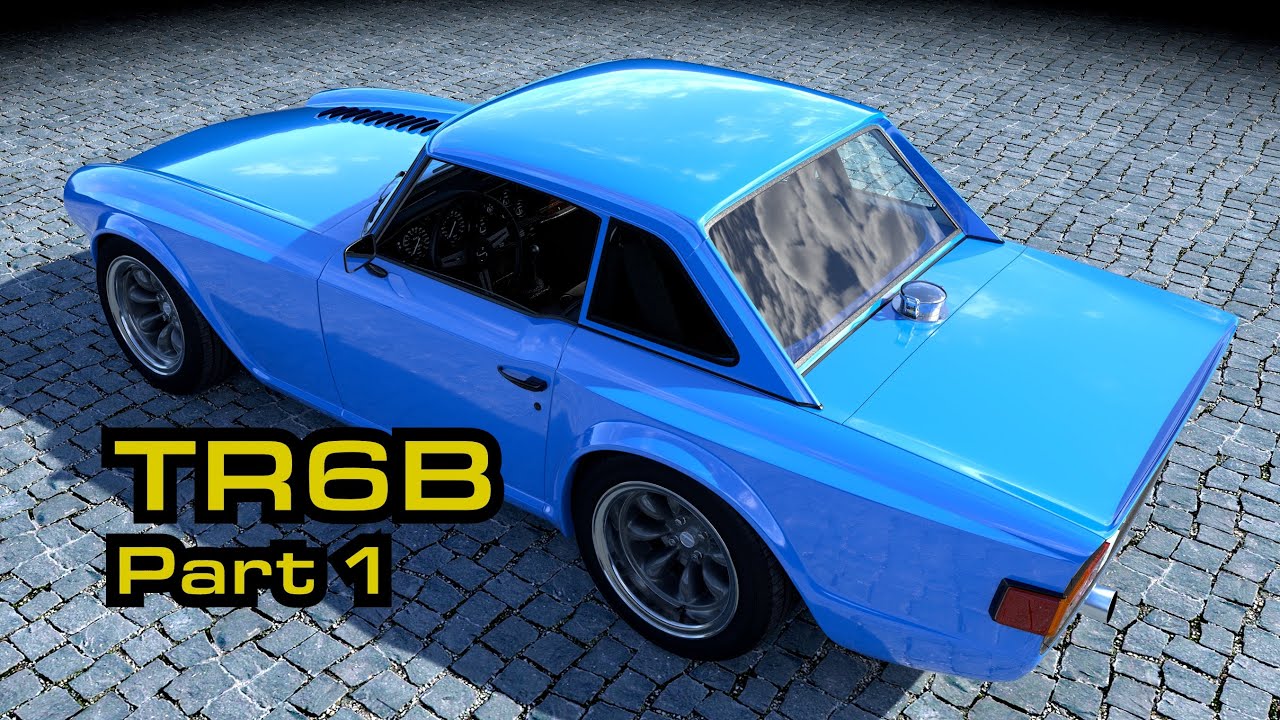
TR6B is defined by three things: a new chassis, a wider body for the wider chassis, and a lighter-weight car. These three elements run through every aspect of TR6B, each interrelated to the other.
CHASSIS
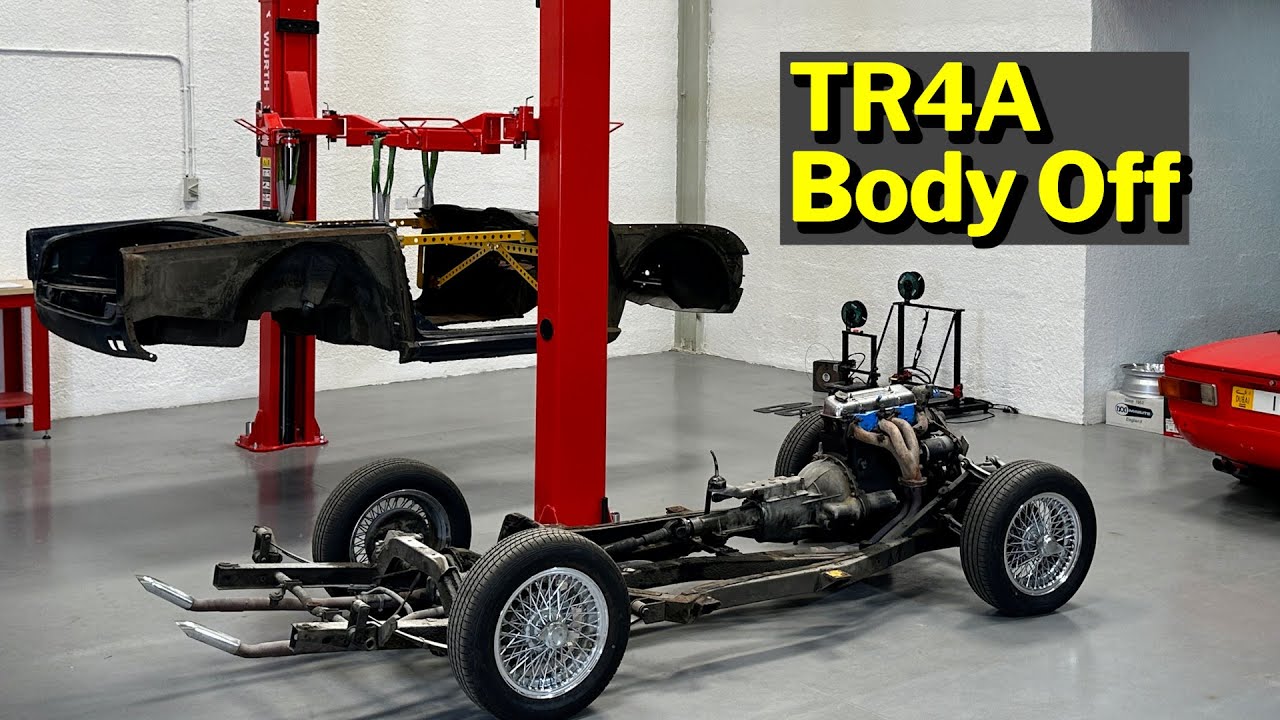
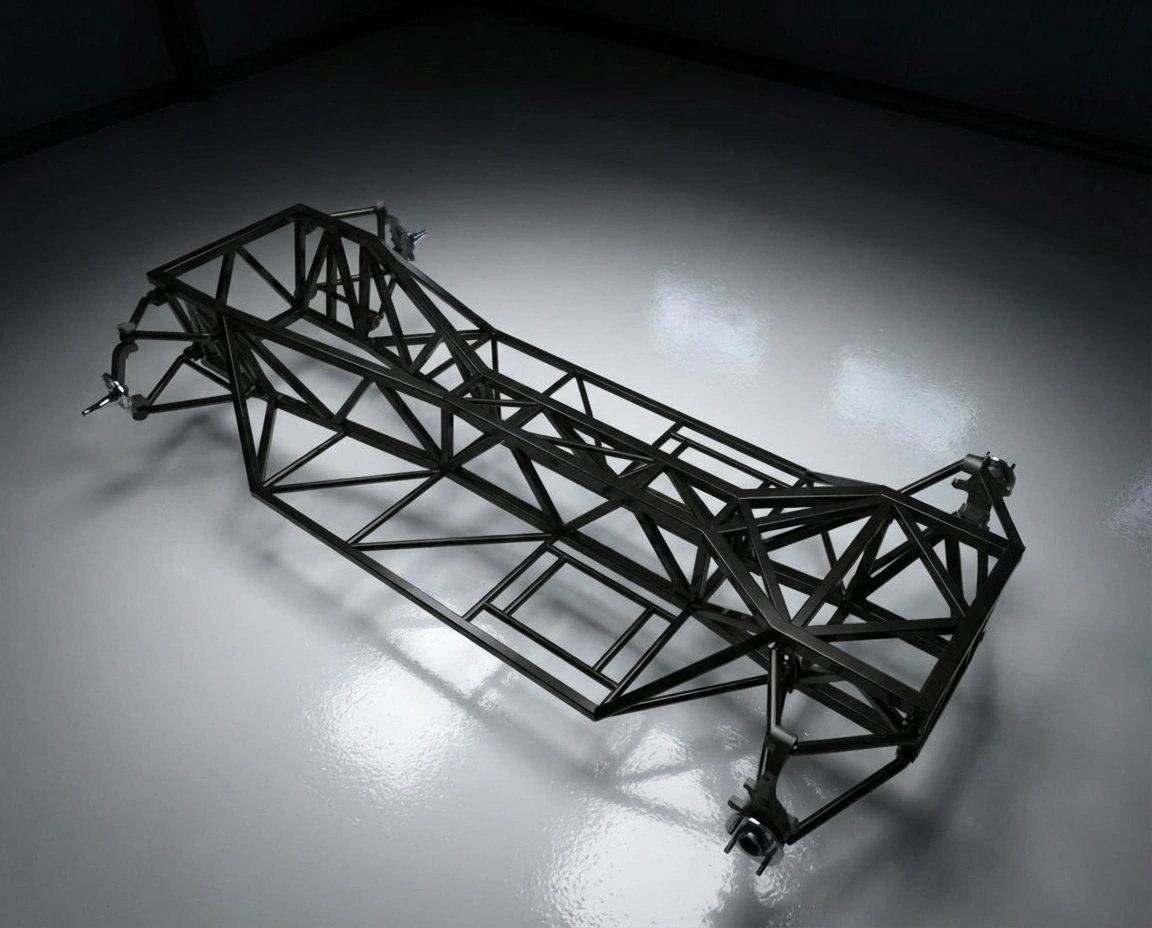
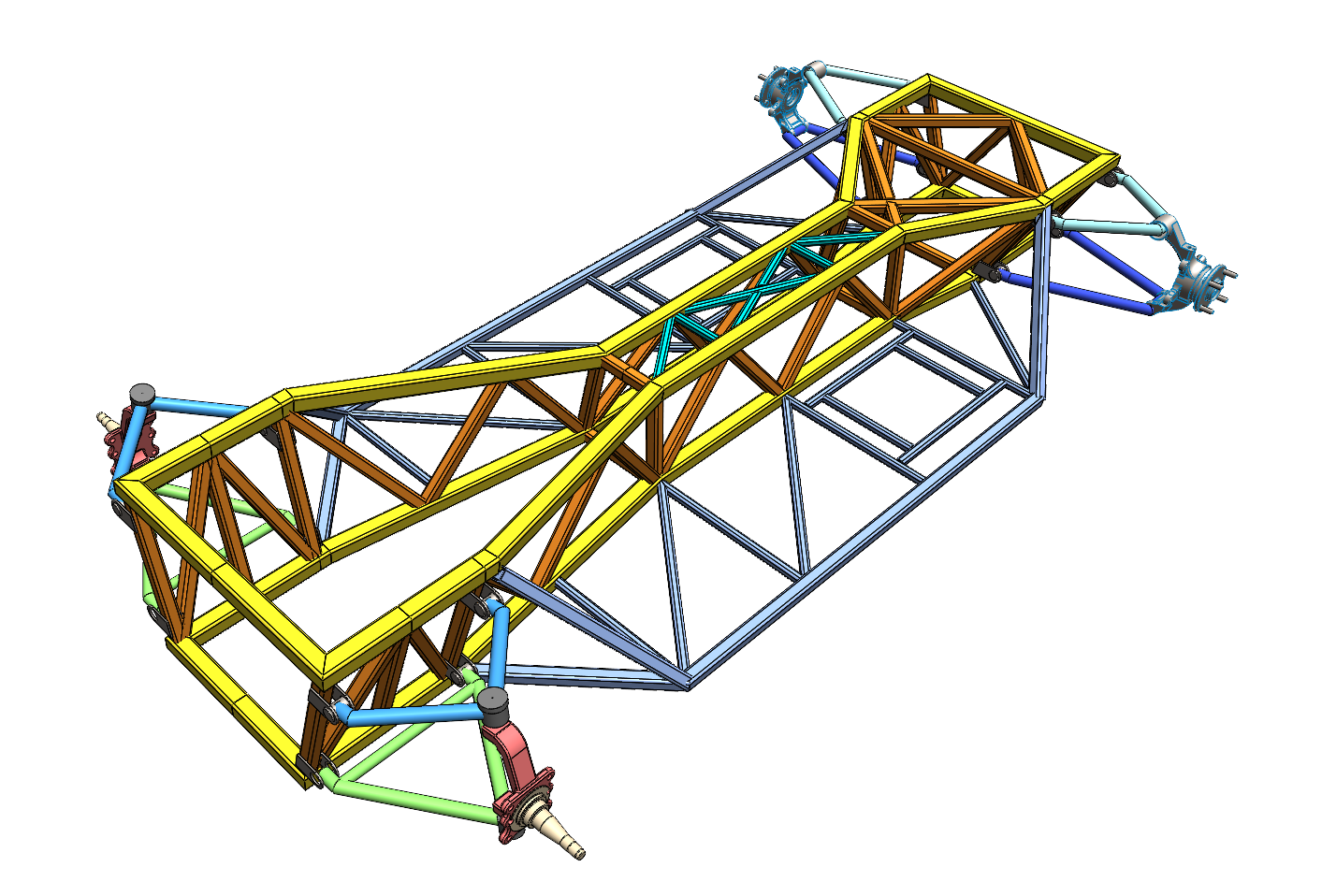
The new chassis is the reason TR6B exists, replacing the original ladder frame entirely. It brings torsional stiffness, with all-new double wishbone geometry and componentry all round — not a marginal change, but a markedly different car.
WIDEBODY
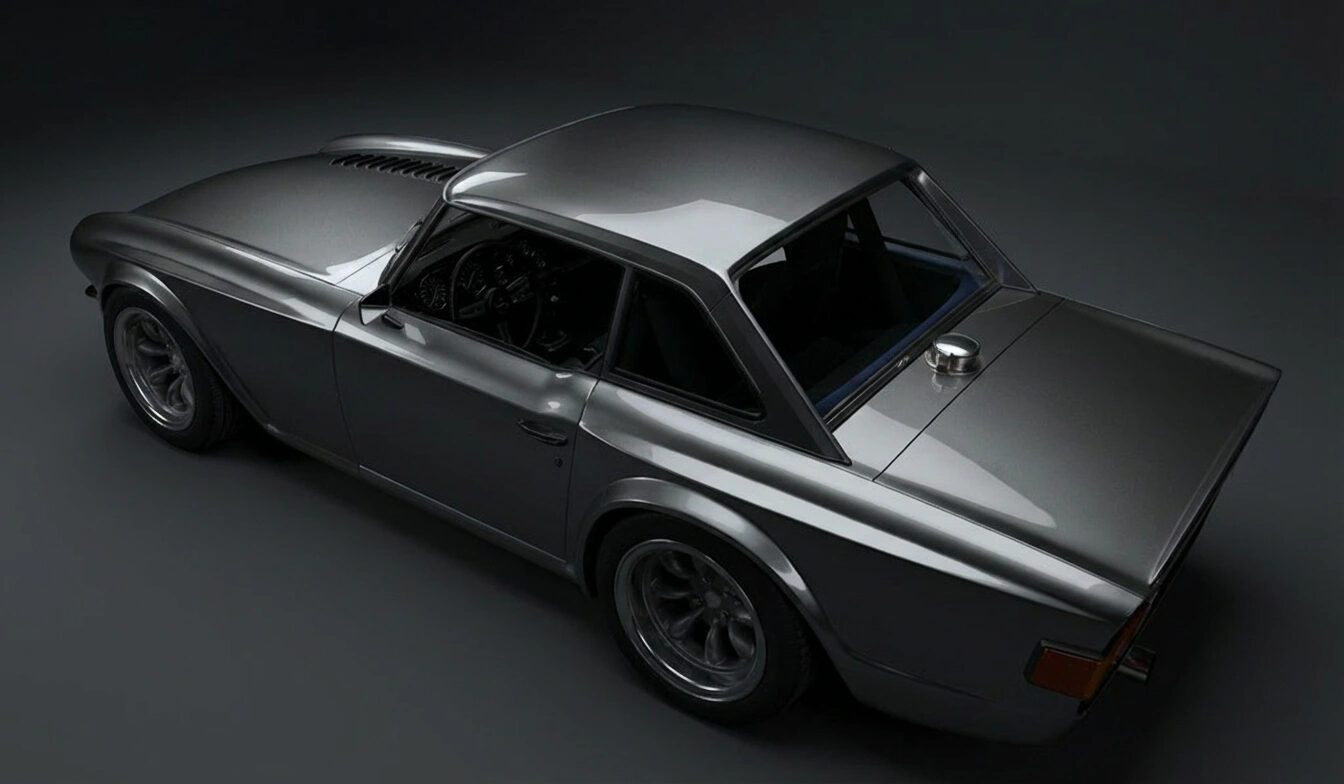
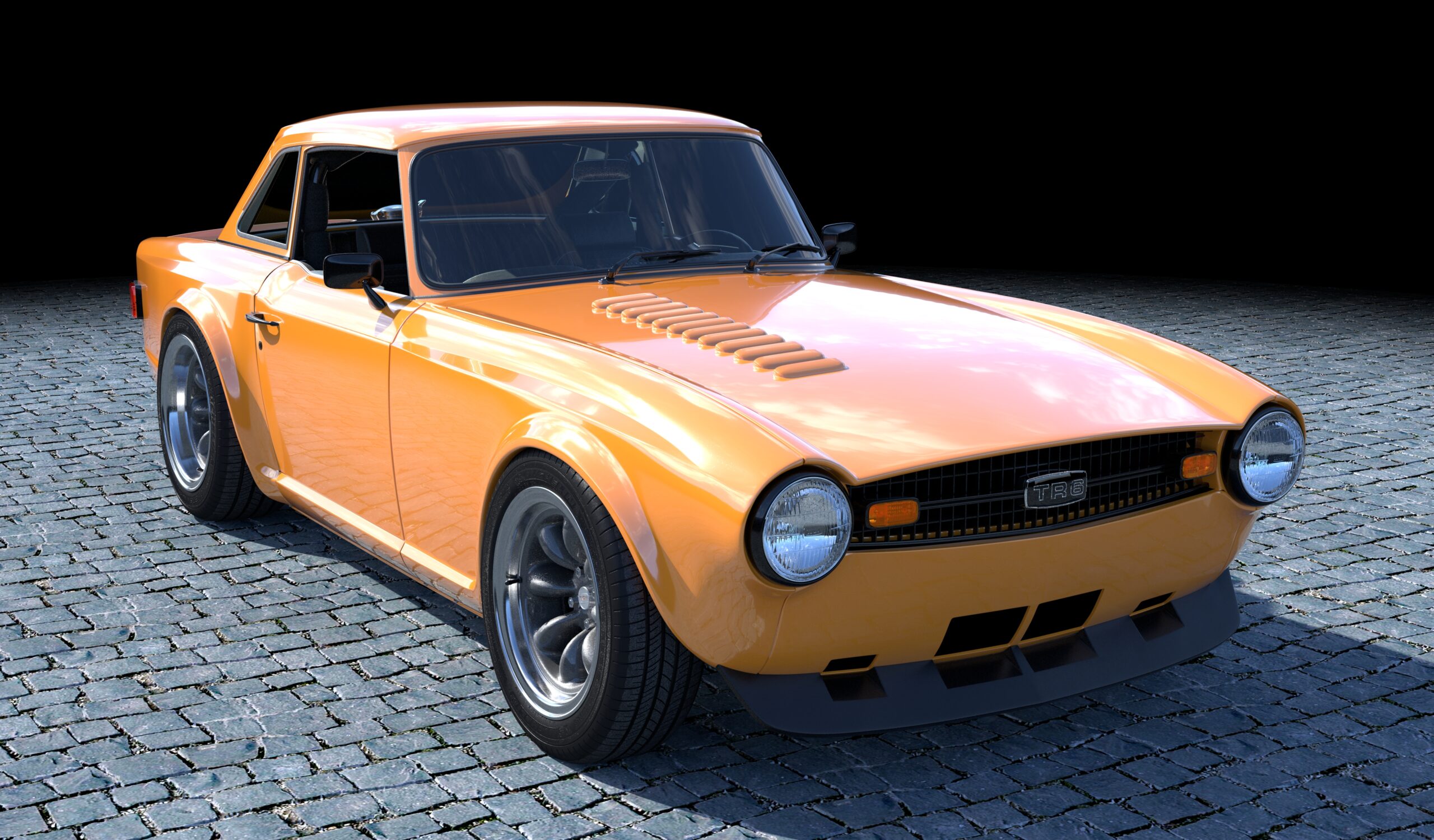
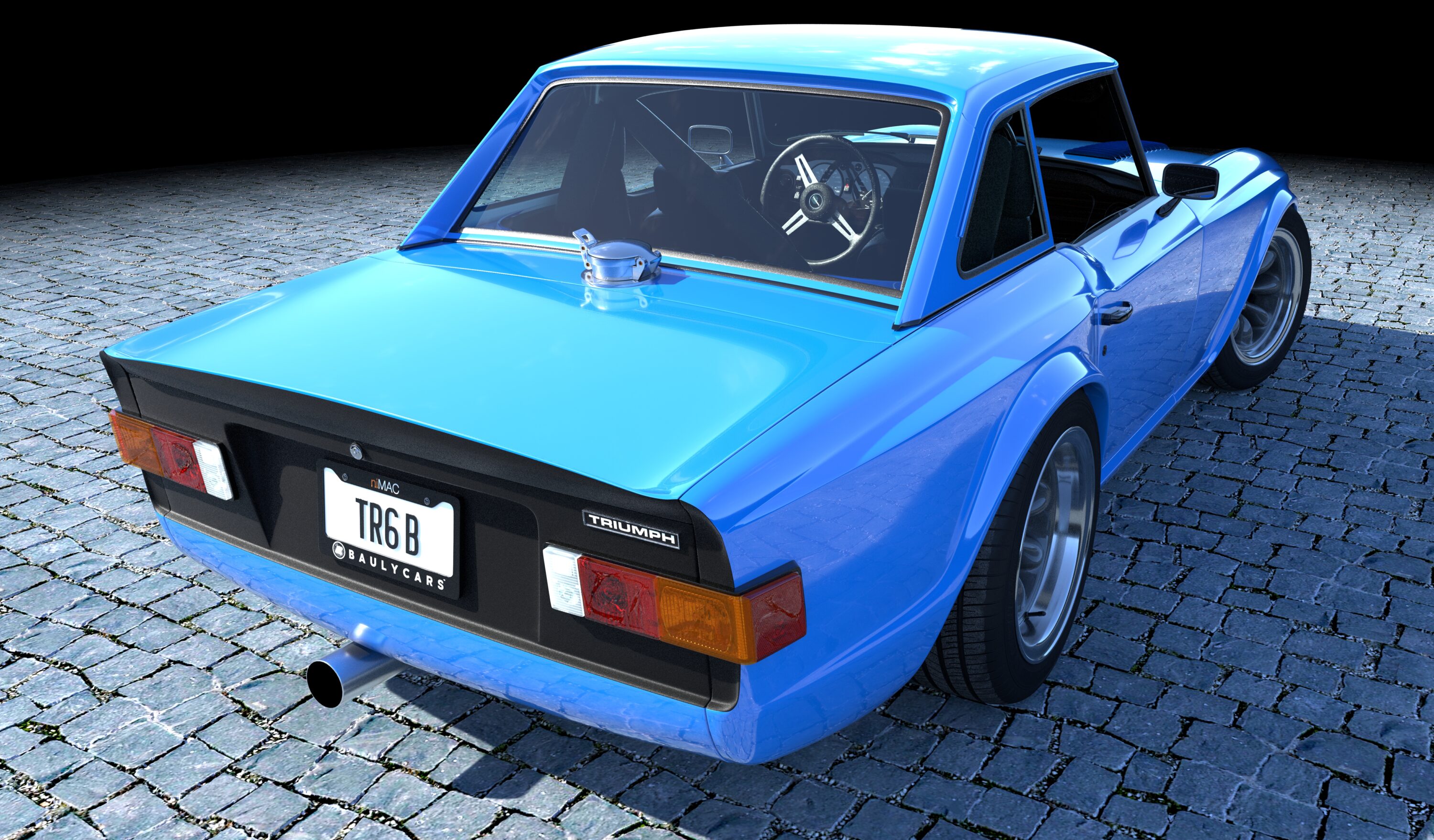
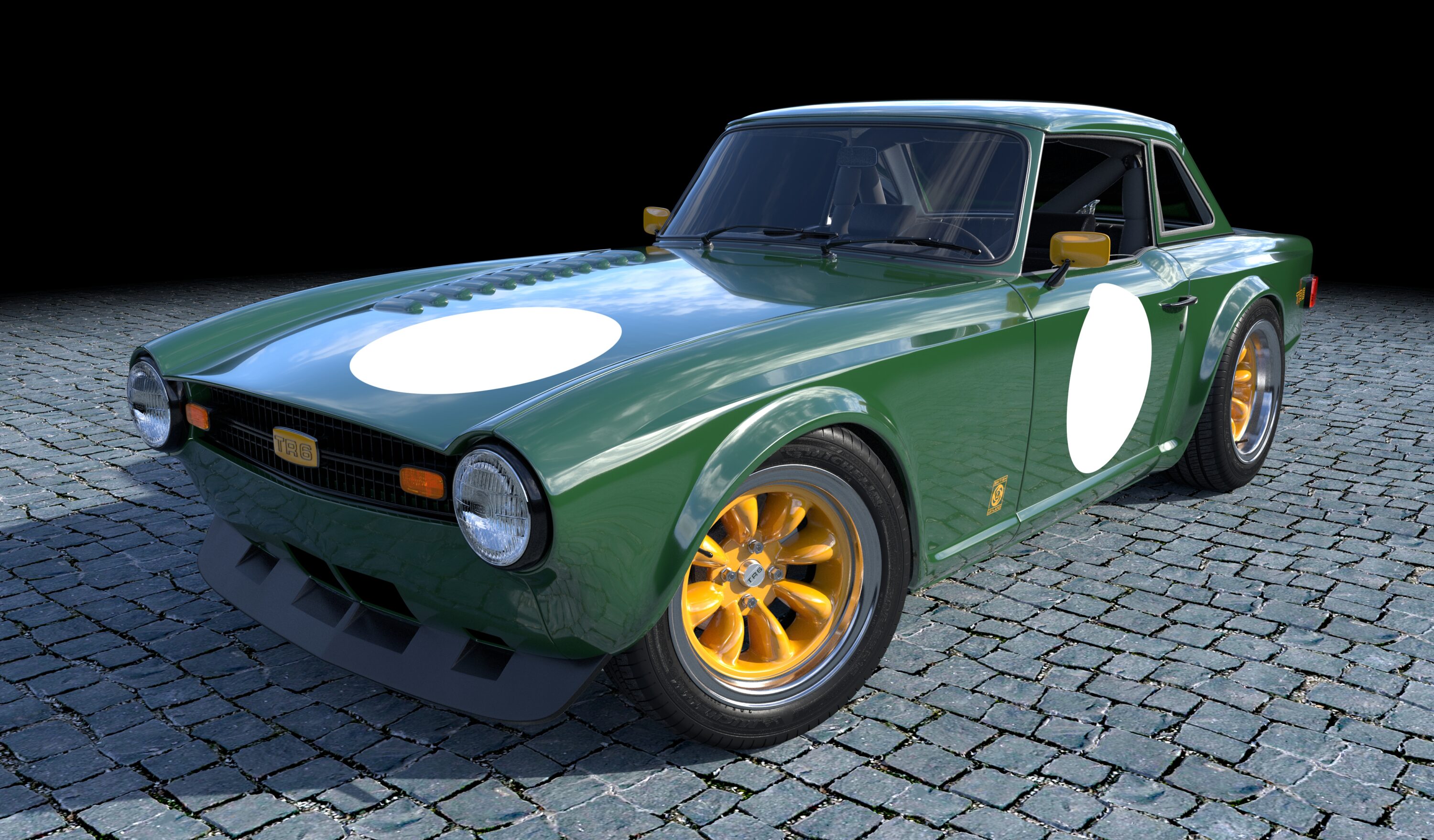
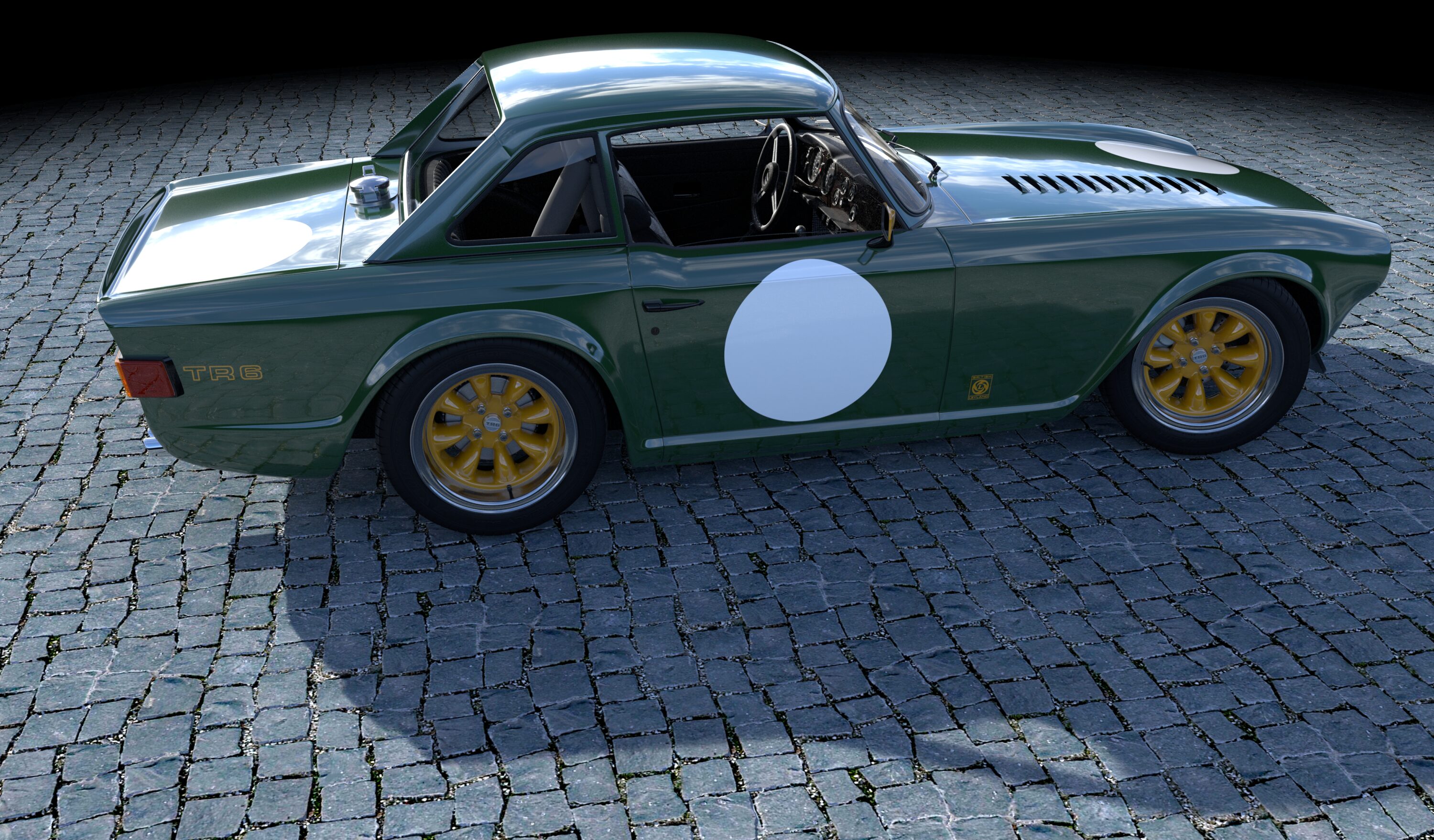
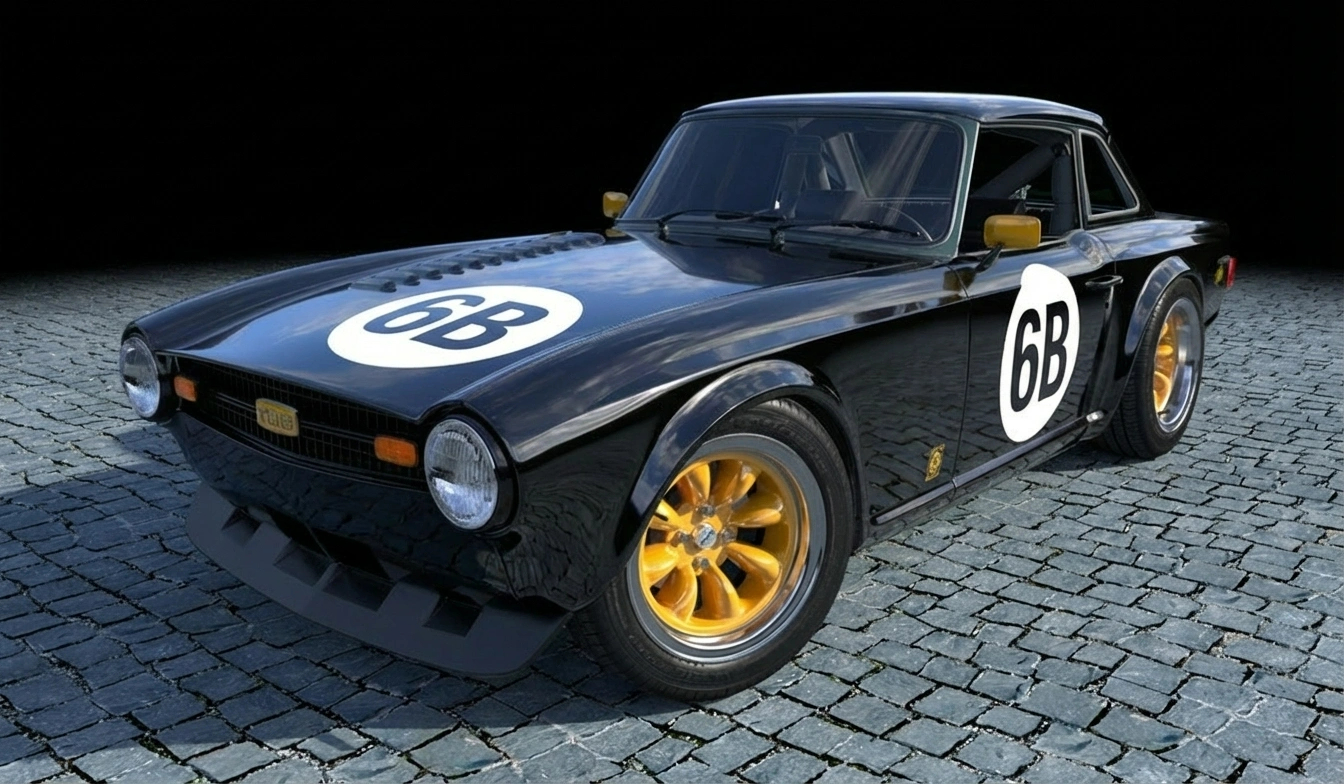
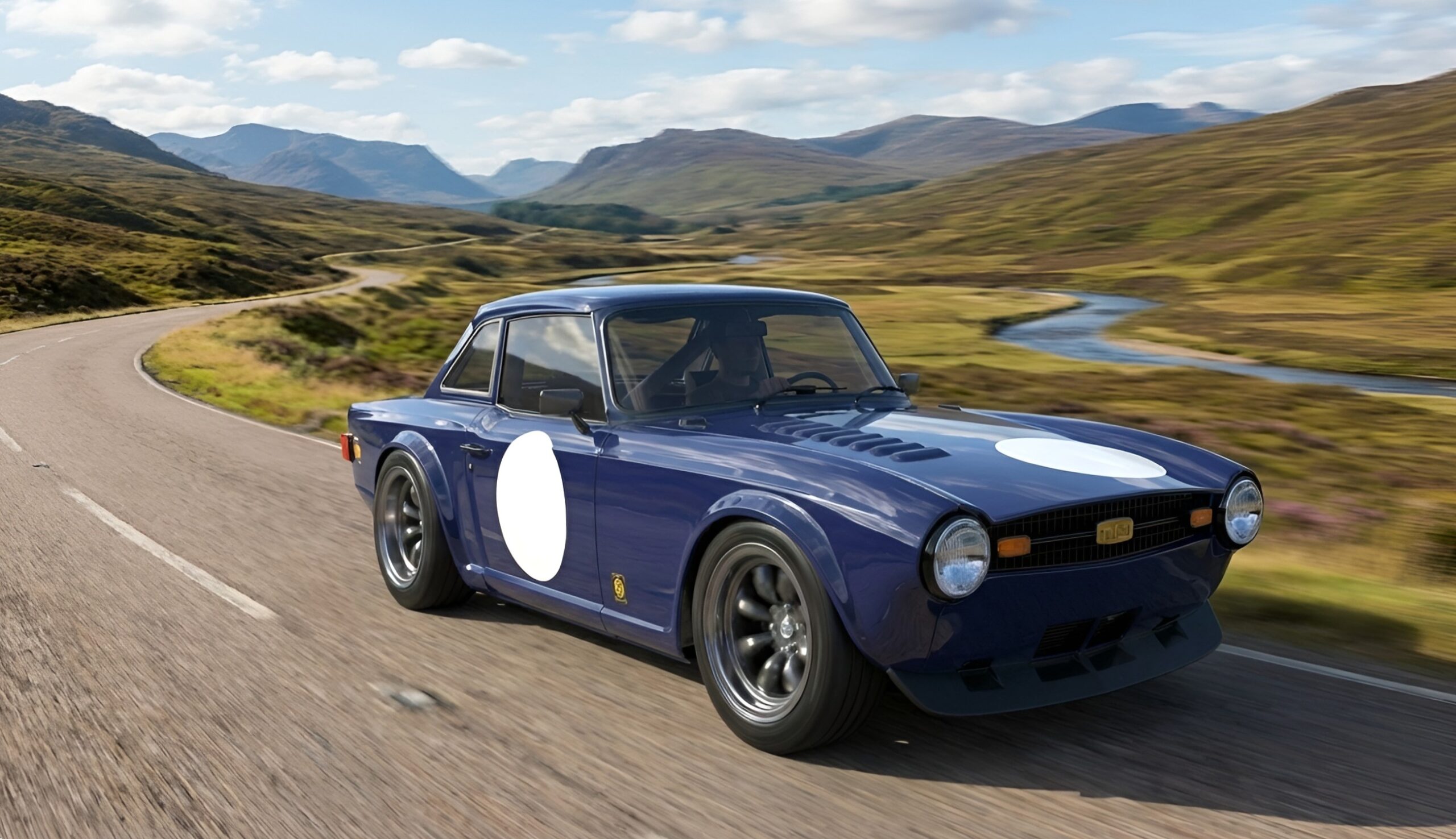
The widebody is the chassis asking for more width, rather than a cosmetic add-on. The panel surfacing for the widebody is defined by a set of geometric rules based on the original body crease lines giving a wider, meaner, better-proportioned car.
LIGHTWEIGHT
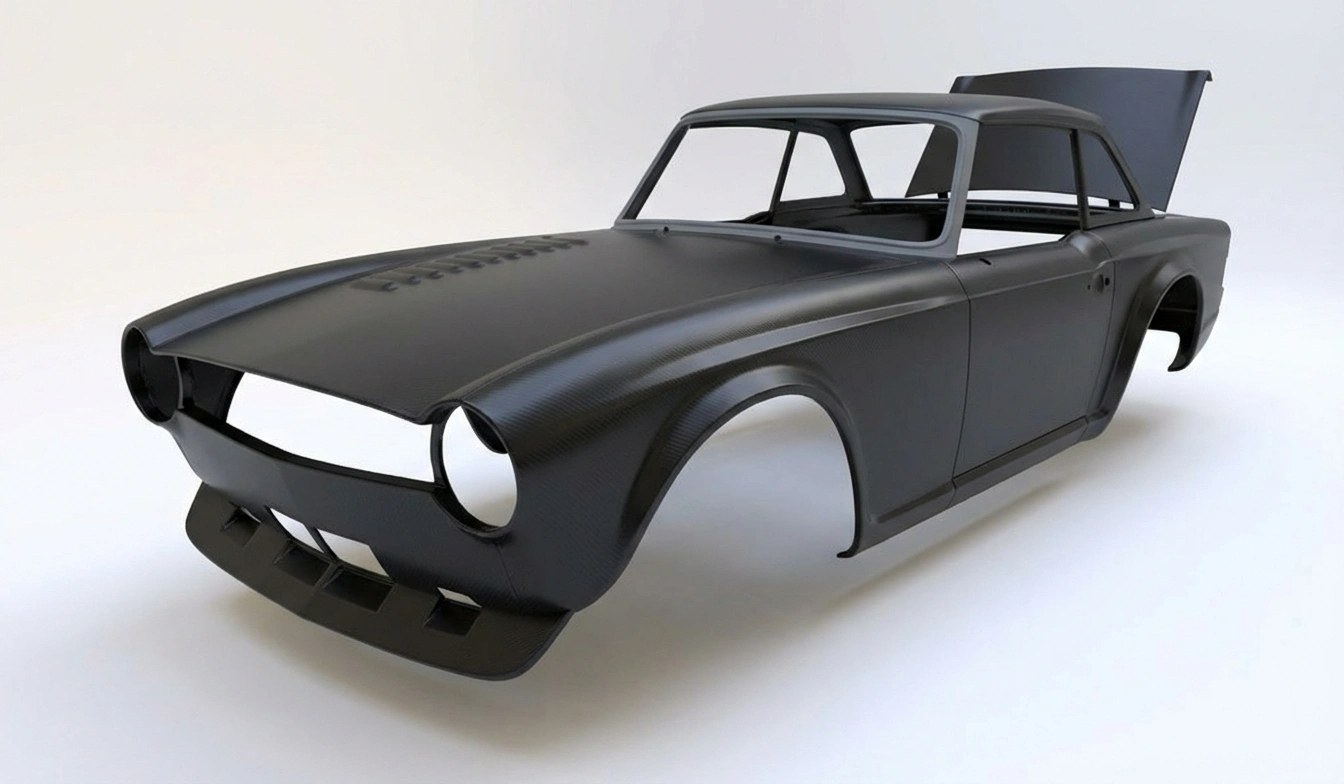
TR6B finds lightness through carbon exterior panels, chassis and bodyshell modifications, and designing out weight across the car. For dynamics, but also enabling ‘heavier’ features back in such as new HVAC and modern safety considerations.
TR6B IS THE CHASSIS
TR6B, the idea, the car, started with the chassis. Everything else is a result of the chassis.
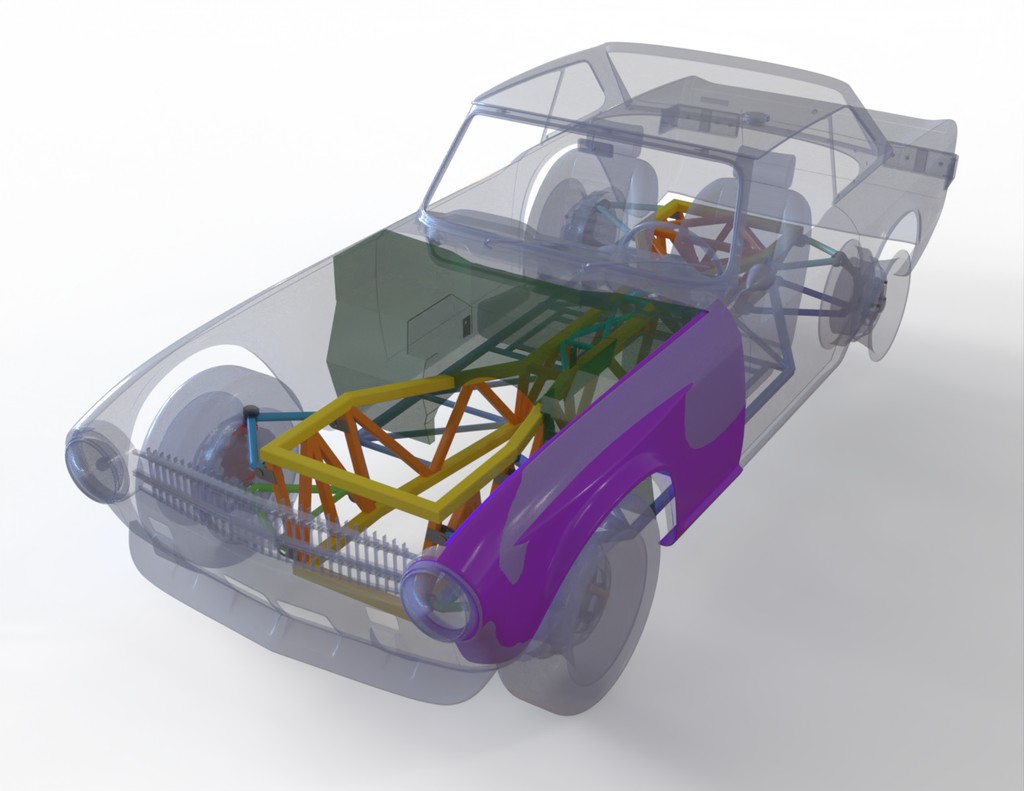
The original chassis is replaced entirely with an all-new structure comprising a steel trussed arrangement with a central spine layout. Why? The new chassis delivers a step change in torsional stiffness and enables new double wishbone suspension with new control arm components and geometry front and rear. This fully resets the original car’s relationship between control arm geometry, ride height and suspension articulation, while also introducing modern, adjustable and serviceable suspension components. At the rear in particular, the previous limitations in supporting modern damper units and shorter spring heights are resolved through new double wishbone suspension and the use of coilover units. Known issues in the original frame, such as rear diff pin cracking, are eliminated through an entirely new rear box arrangement and differential support. For driver ergonomics, the chassis enables a lowered cabin floor, increasing leg, knee and headroom and placing the driver further down in the car, along with a reset of the driving position. For safety, direct-to-chassis mounting points are designed-in for modern seatbelt systems and correct provisions for roll cage integration. The increase in torsional stiffness and revised suspension geometry deliver a completely different level of handling and ride, and are the key instigator for the widebody form of the car, enabling the suspension to be designed around a new wheel and tyre package.
WIDER, WITH PURPOSE
The wider proportions of TR6B are a direct response to the chassis beneath. And for the love of the looks.
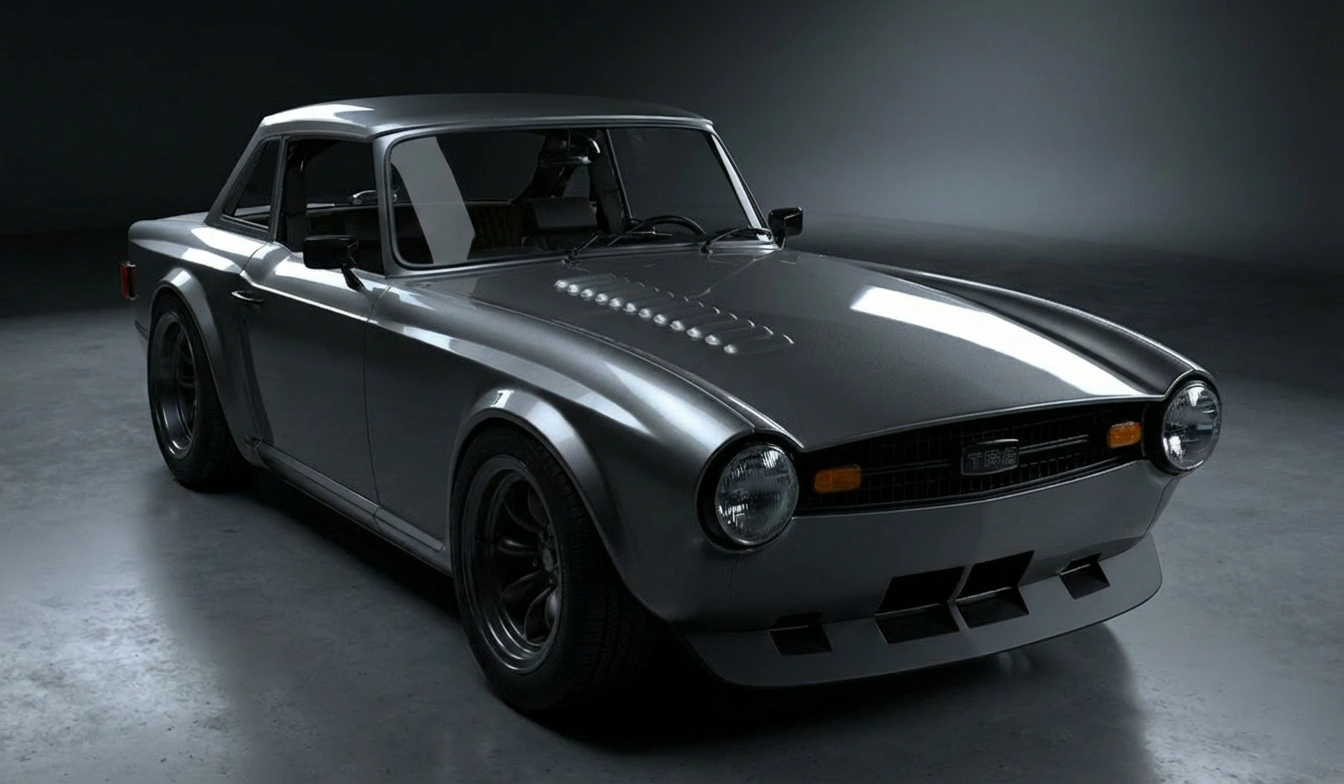
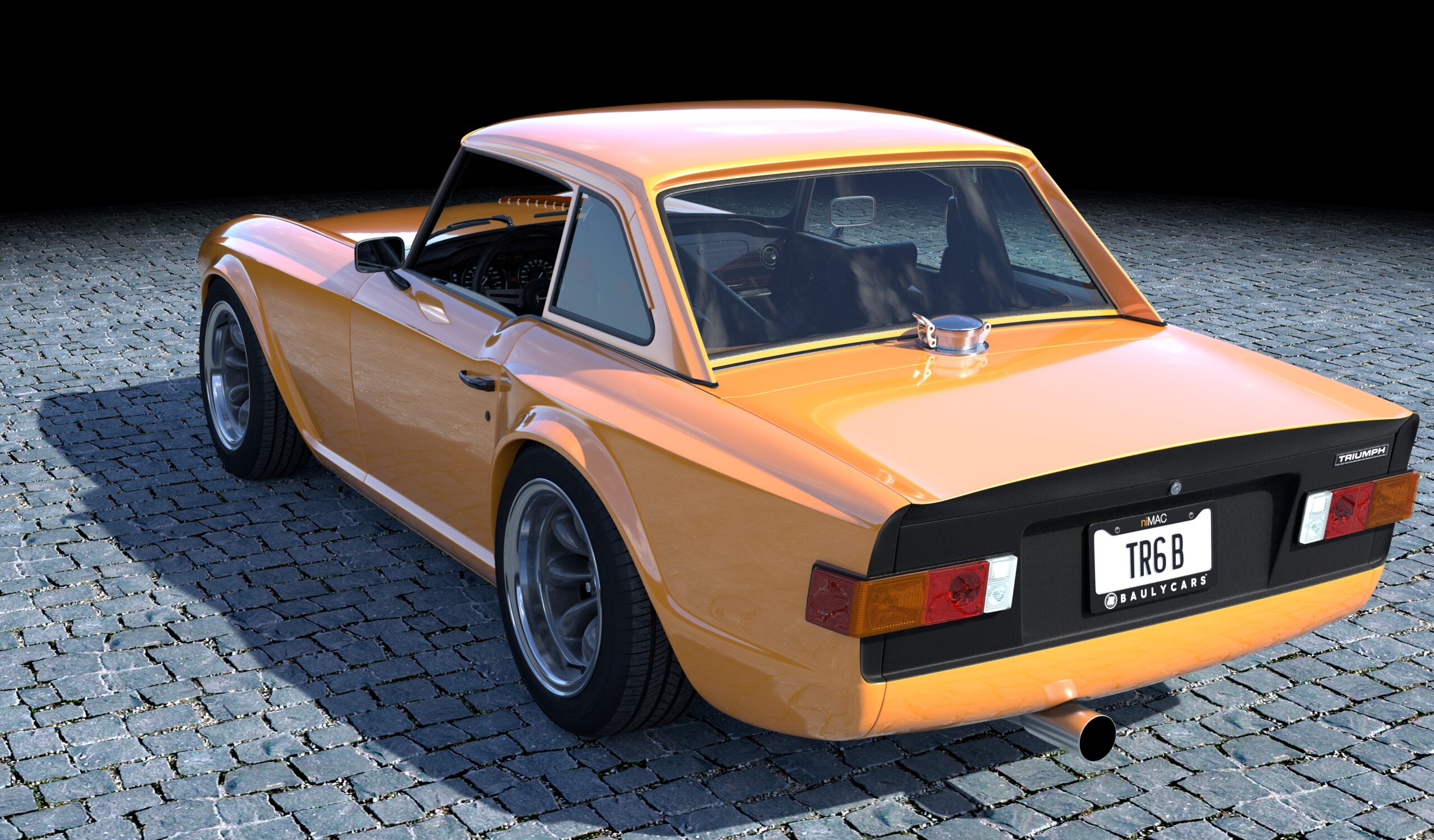
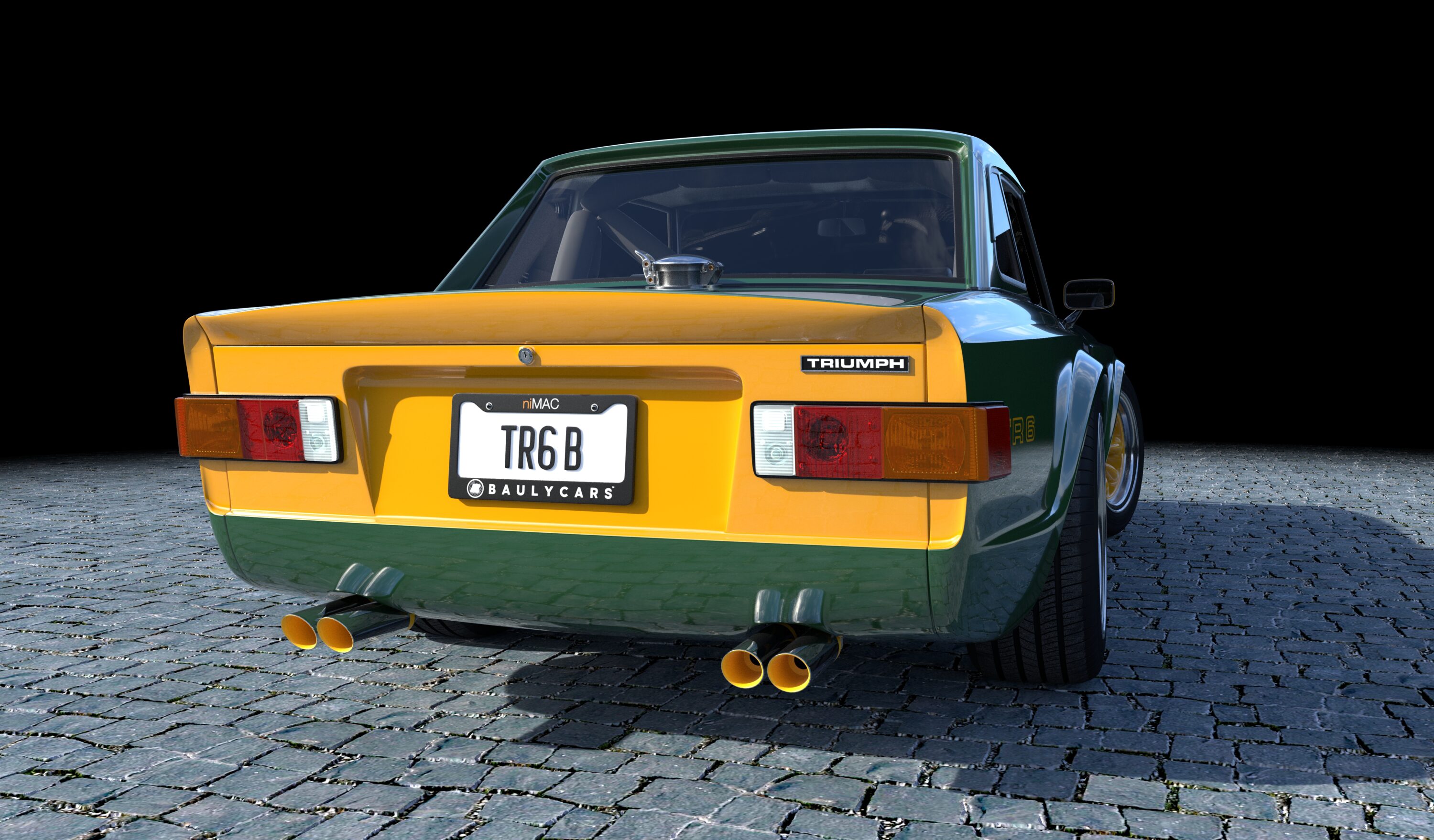
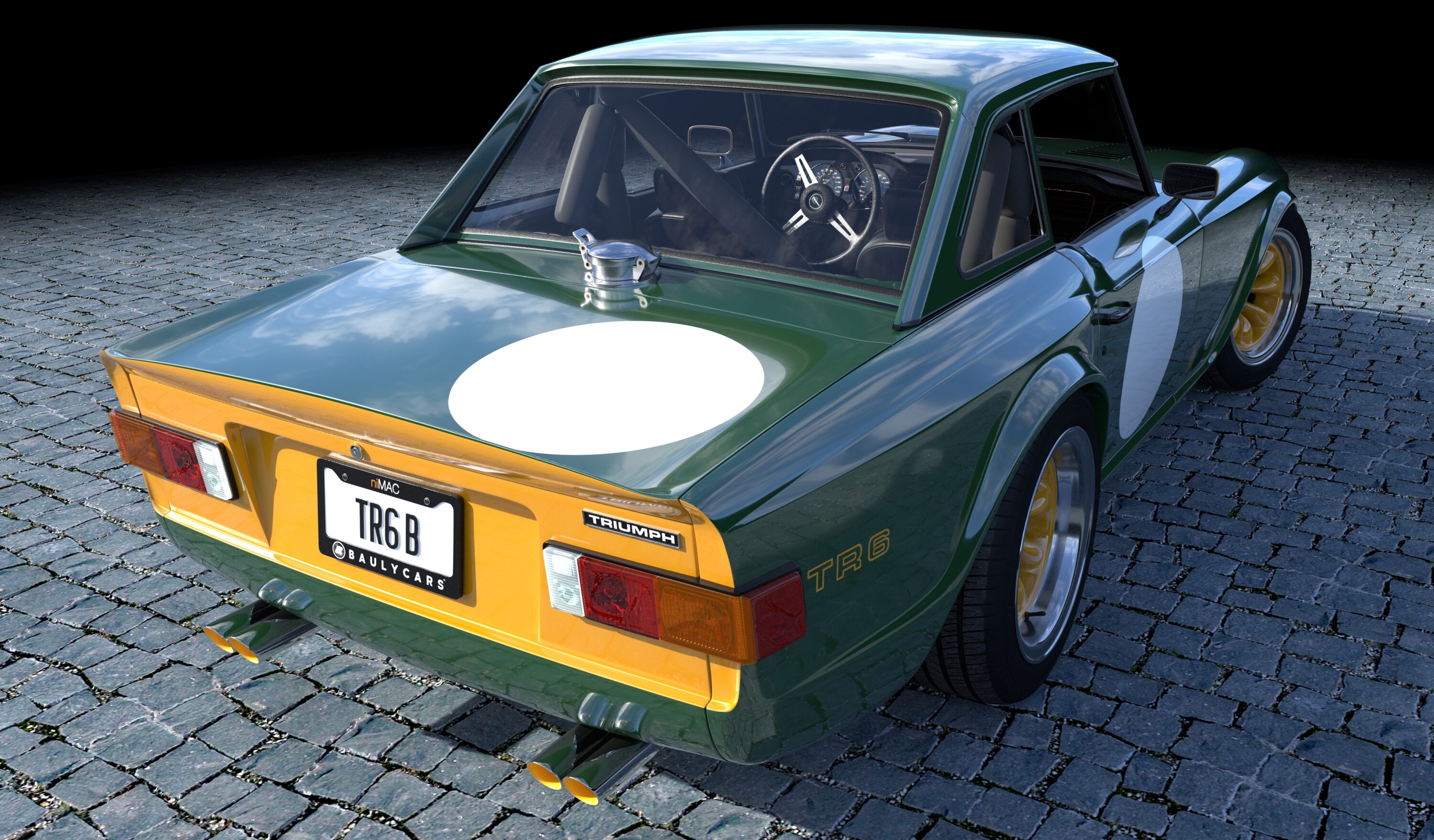
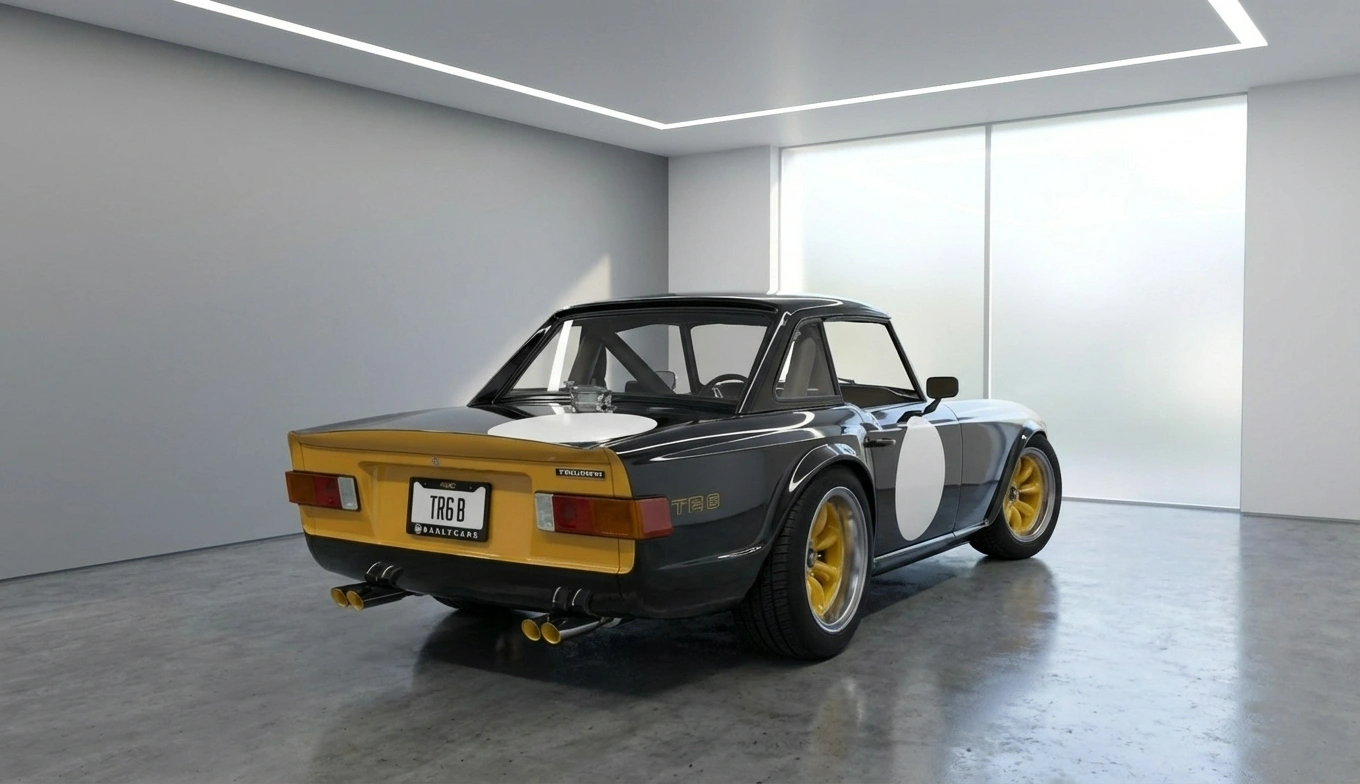
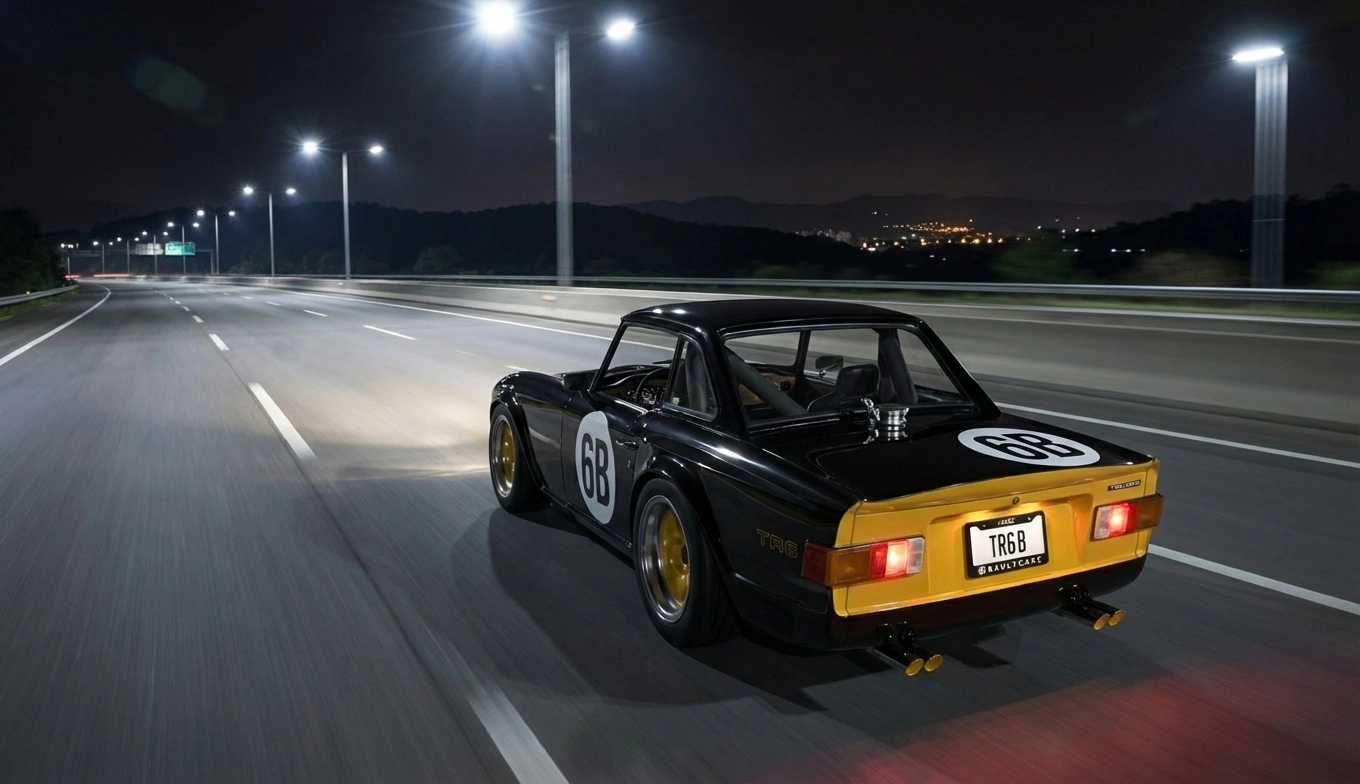
The widebody exists first and foremost because the chassis asks for more room: more trackwidth, lower rideheight, more wheel, more tyre. That said, we also unashamedly wanted to create a car that just looks ‘so good’ – a love for the widebody TR6 race cars in period as one inspiration, as were particular widebody box-arched cars from the 80’s and 90’s – and yet we wanted TR6B to look like its own thing, not a roughly built flared-arch race car, nor an obvious copy of arch forms from another car. We developed a series of geometric rules that are themselves based on the existing crease and feature lines of the original body. Applying those rules defines the new widebody surfaces and features, giving repeatable front and rear wing surface geometries, and as a result a look that then appears ‘right’, with a balance between widebody drama and the original car styling. Overall a widebody look that is read as one style with the rest of the car and is simply great to look at. With the front and rear widebody wings produced in carbon, the widebody is also part of removing weight along with new carbon panels for the bonnet, bootlid and hardtop. Wider, lower, lighter, with purpose, but also just for the love of the look – the TR6B widebody.
LIGHTER WHERE IT MATTERS
Weight reduction is pursued for performance, but not at the expense of making the car bare or unusable.
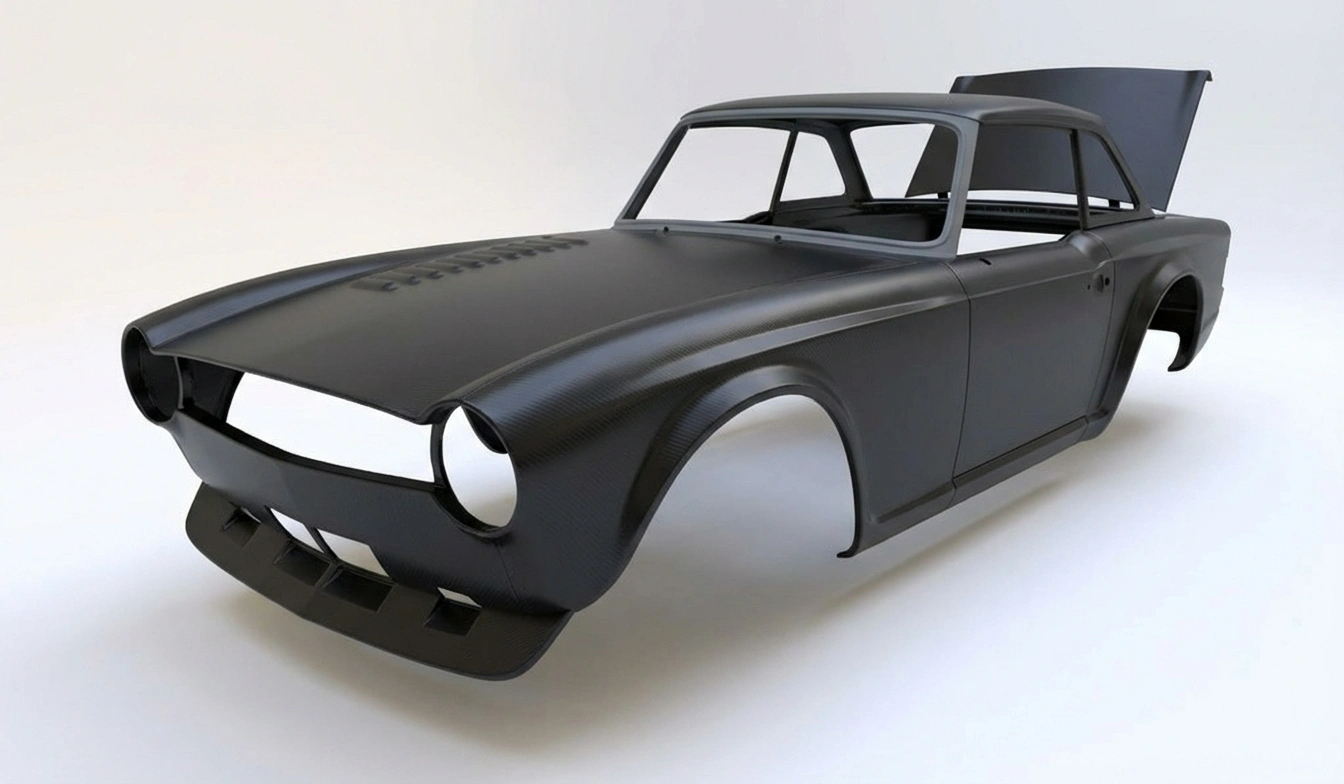
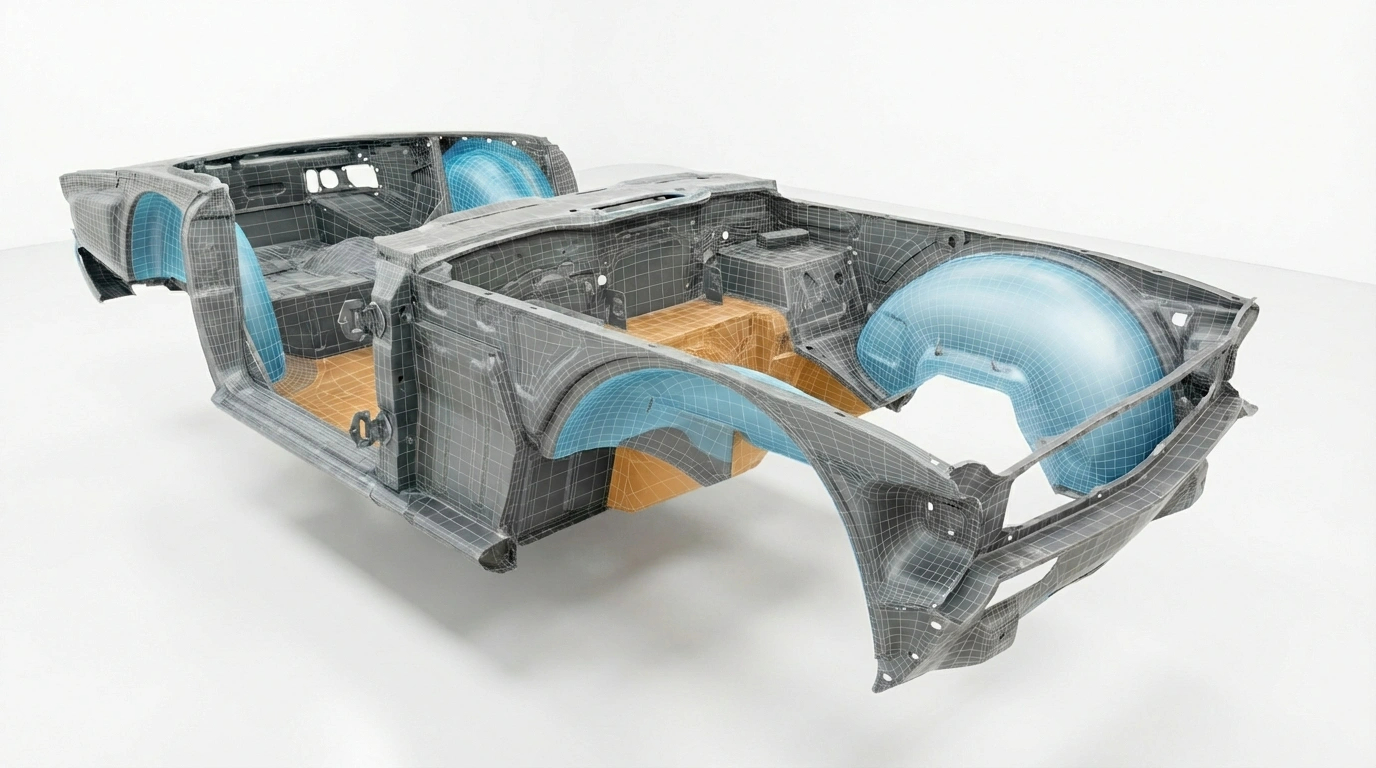
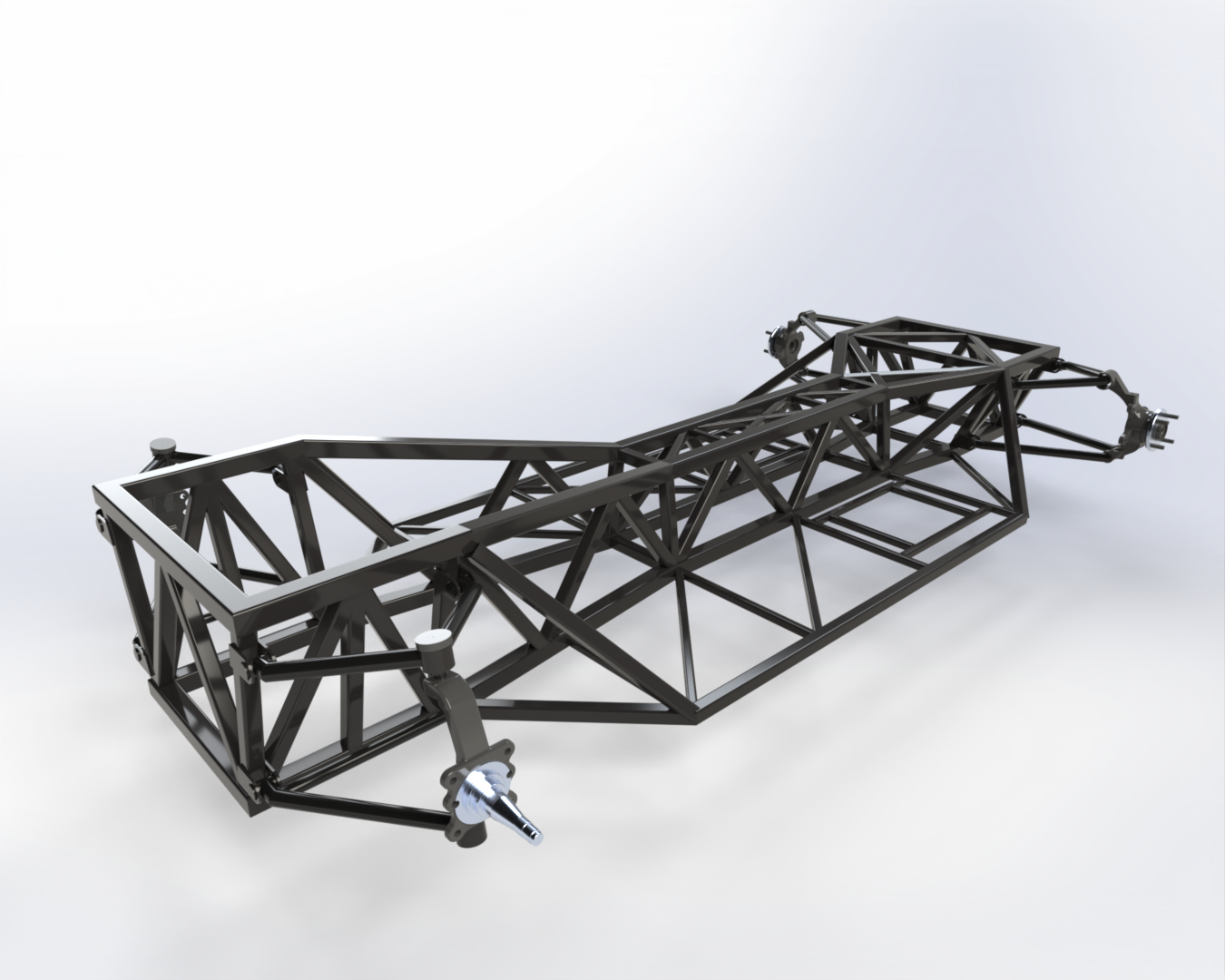
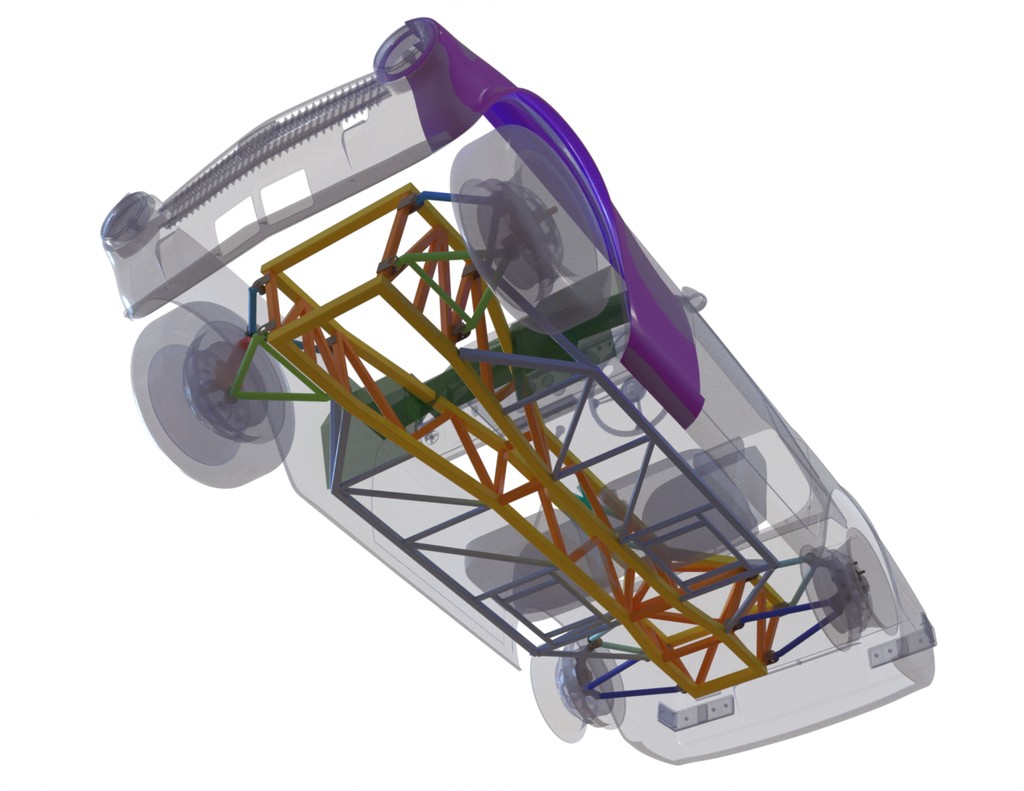
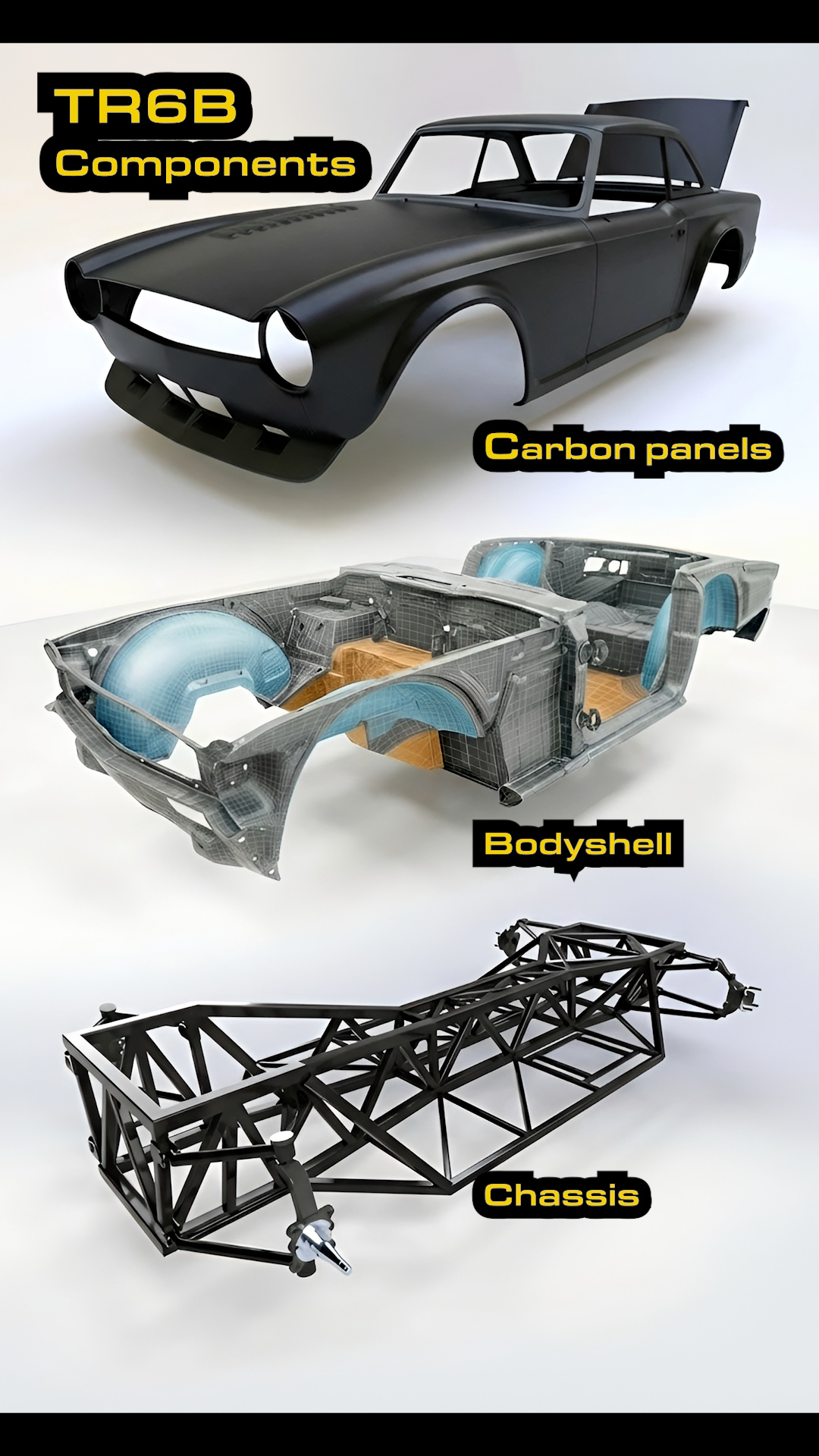
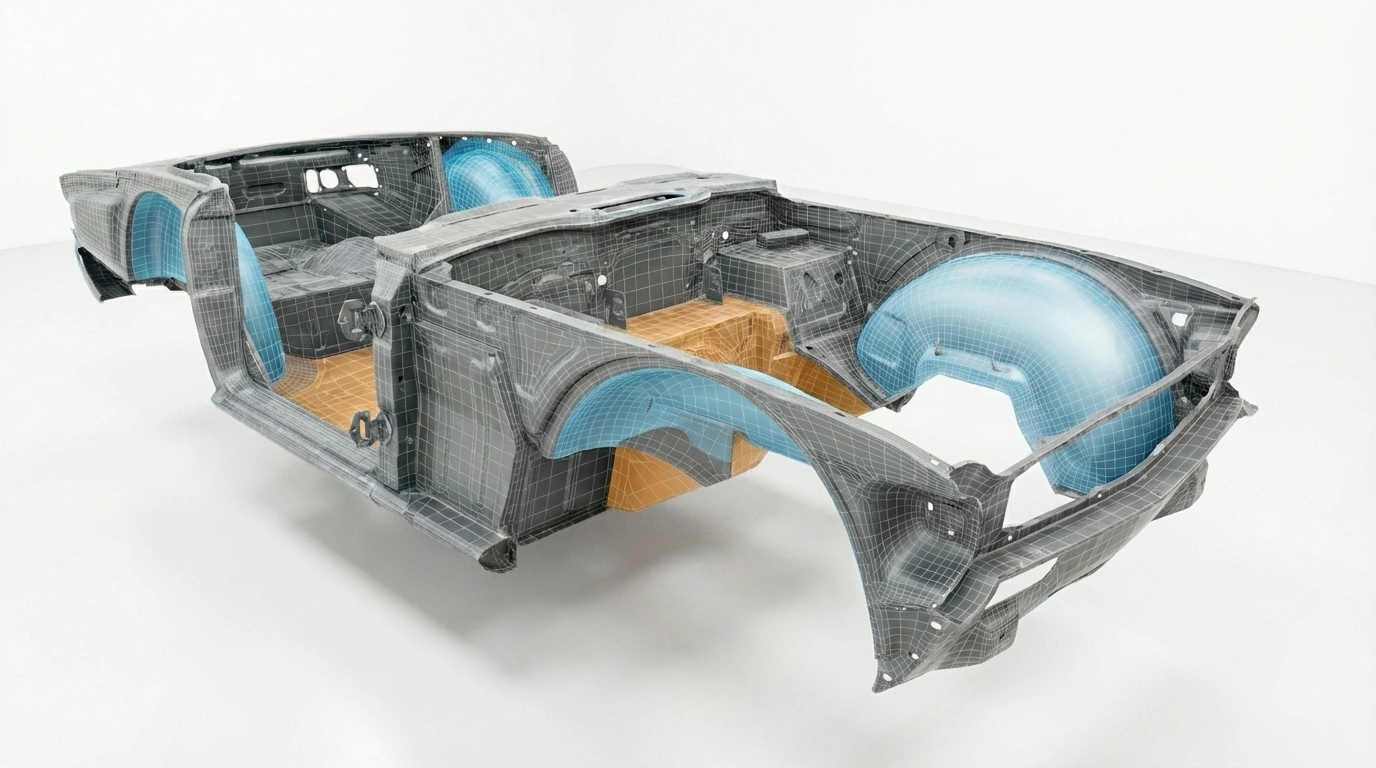
The original car is light by today’s standards, but was not particularly light in period. TR6B looks to reduce weight primarily for performance, but not by stripping the car out. By brief, we want a car that also remains comfortable and usable, with a proper interior, sound deadening, modern HVAC and other modern features (including safety) where they add to the drive and living with the car. We want those features but want to find weight reduction to include them. Significant weight reduction is achieved through carbon exterior panels, comprising the widebody front and rear wings, bonnet, bootlid and hardtop. The chassis and suspension structural design follows a strict utilisation to remain lightweight and the bodyshell modifications also help shed weight. Beyond that, every system and component in the car is scrutinised to remove unnecessary weight wherever possible. Particular attention is paid to unsprung weight, with uprights, hubs, brake assemblies, wheels and tyres all selected to minimise weight at the wheel. The car is designed around 15″ and 16″ wheels, avoiding unnecessary increases in wheel diameter and weight, and allowing the use of appropriately sized braking systems. The result is a car that is lighter where it matters, to the benefit of how the car handles and rides, while remaining a complete, comfortable and usable car.
THE SIX
Developed well beyond its original form, without losing what made it the TR6.
TR6B is built around the Triumph straight-six. It is the engine that defined the TR6 — its very namesake, its sound, and the source of its character. For many, that sound is where the connection to the car begins. A highly developed TR6 engine brings an entirely different level of powerplant to TR6B — practically unrecognisable from the original in performance terms, but with the sound, character and torque all amplified. TR6B is built with that motor: torquier than ever, with greater rev capability, delivering a level of performance well beyond what most associate with the original TR6, while further intensifying the noise and character that defined it. Higher specification engines are built around a new billet crank and bespoke fuel injection, with outputs of up to 250bhp in road-going form — a world away from original figures. With modern engine management, uprated fuelling and properly engineered cooling, that performance is matched by reliability and consistent, dependable behaviour. Each engine is built in partnership with our engine builder, with specification defined with the customer to suit how the car is intended to be driven. TR6B also offers a wide range of gearbox options, from original 4-speeds with or without overdrive through to 5- and 6-speed conversions, with the choice defined by how the car is intended to be driven.
THE DRIVING POSITION
Not a retrim. A rework of how you sit and fit in a TR.
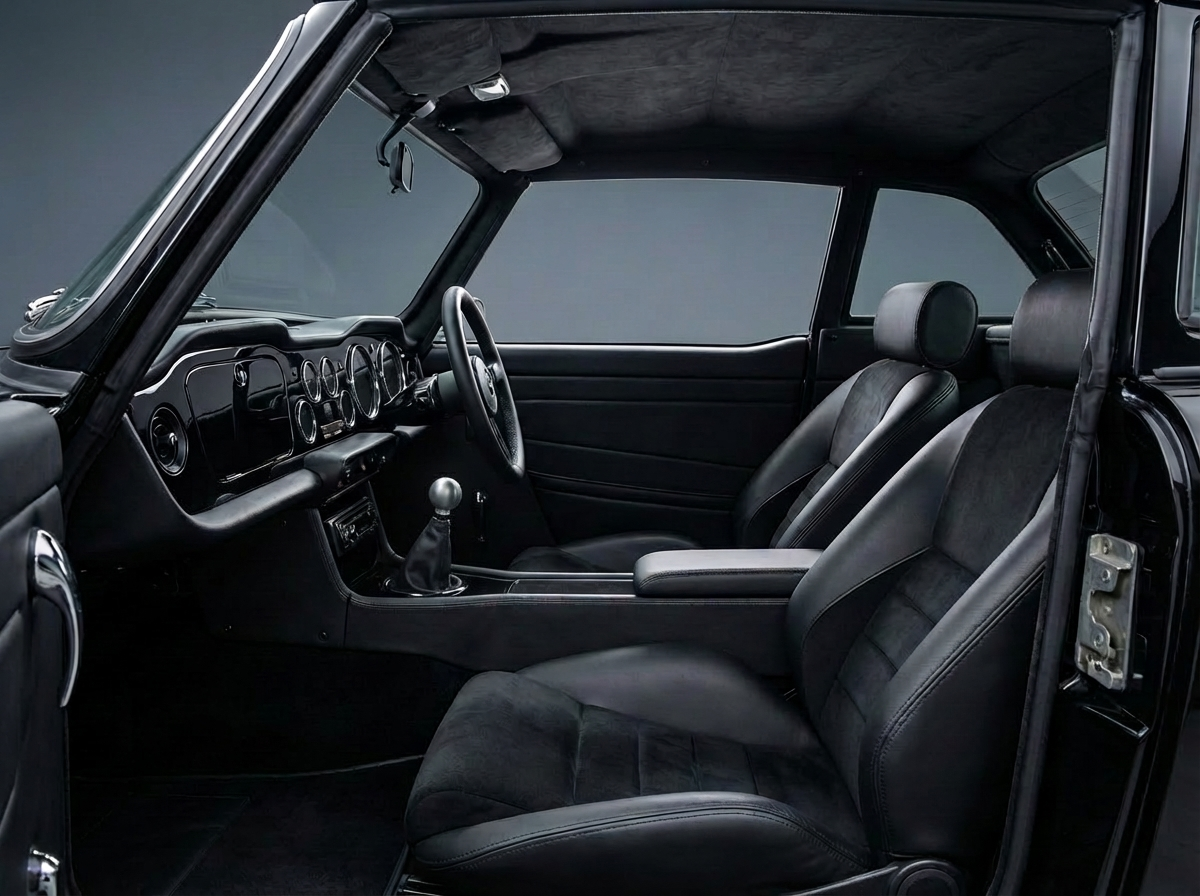
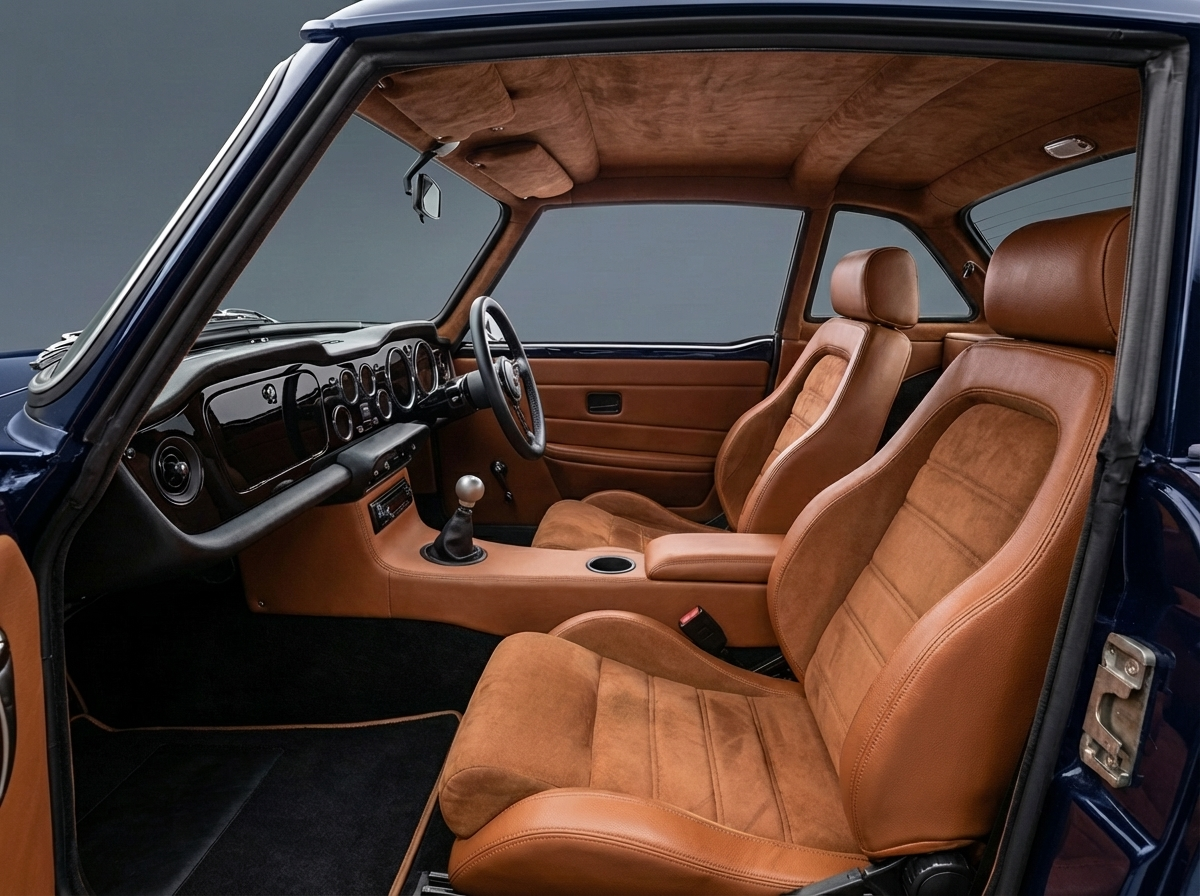
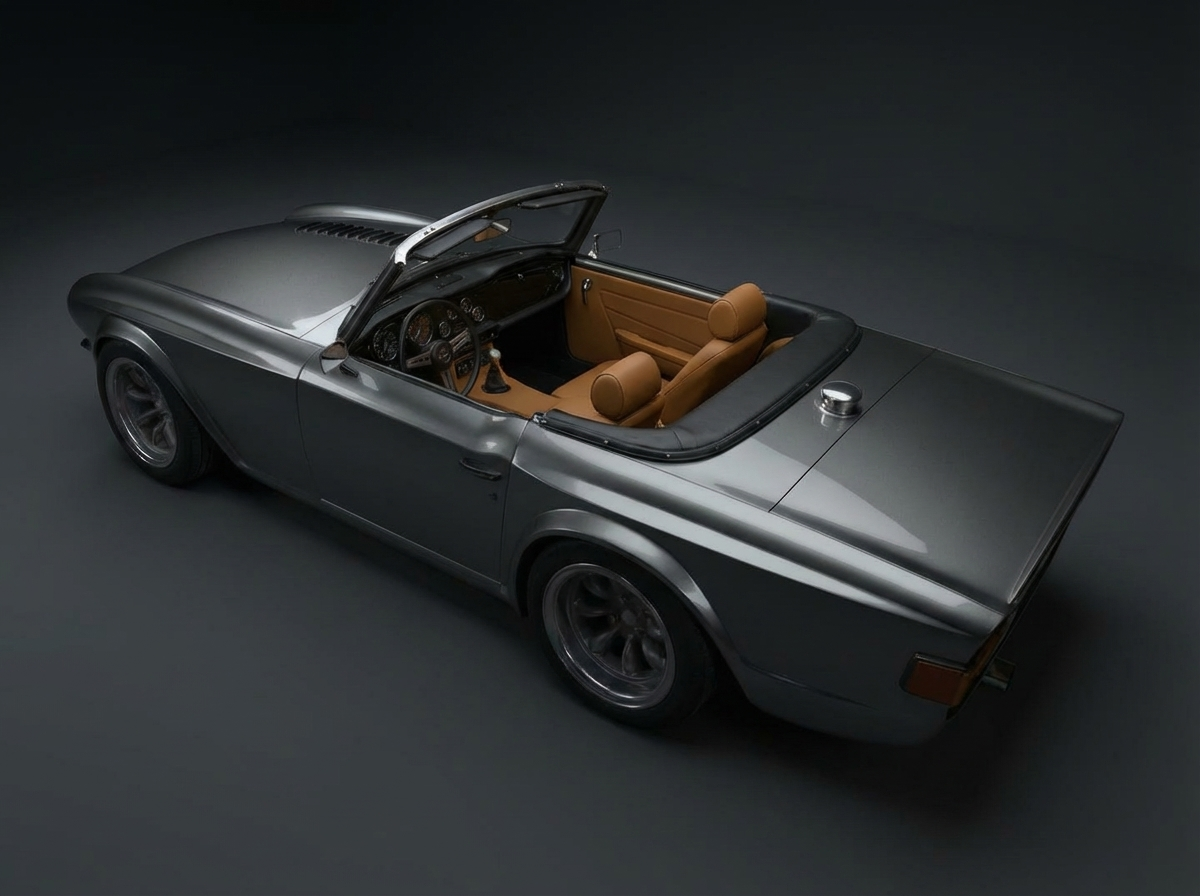
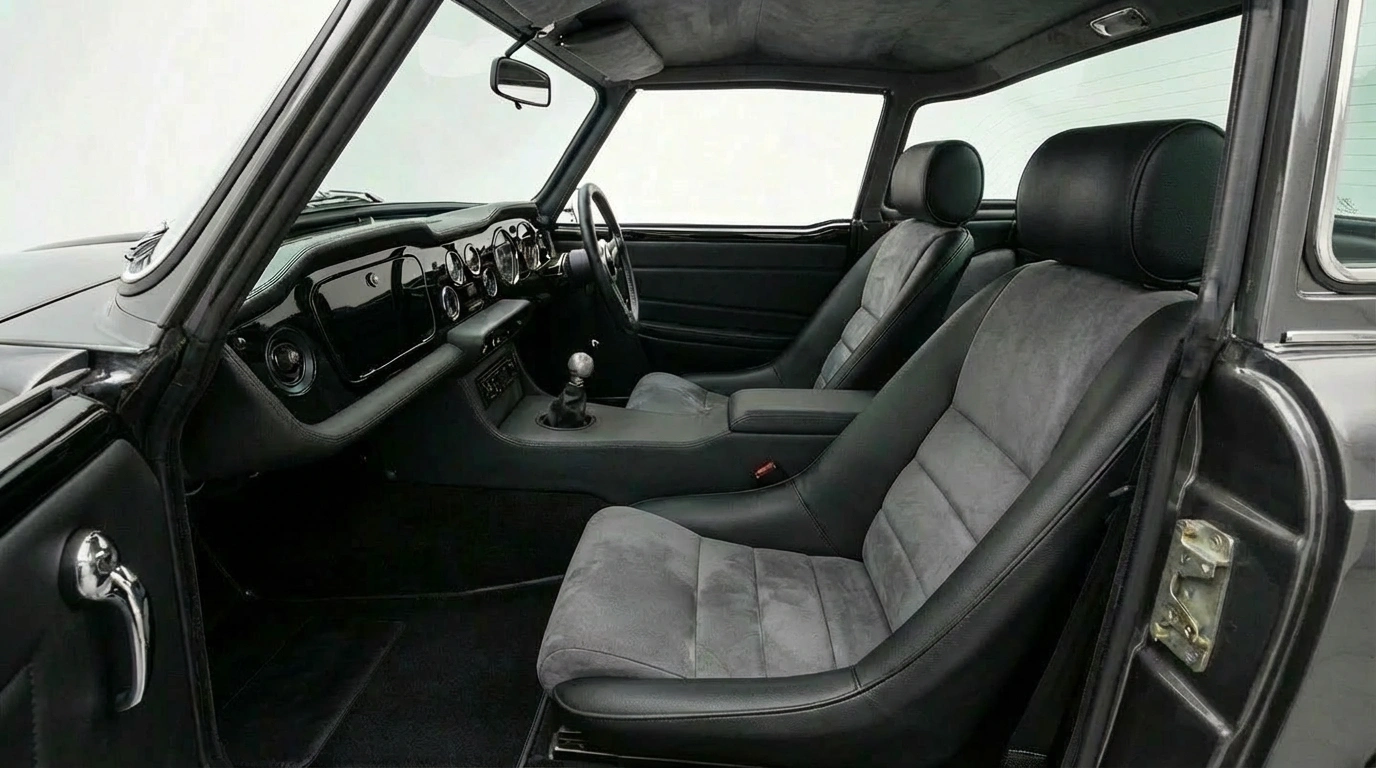
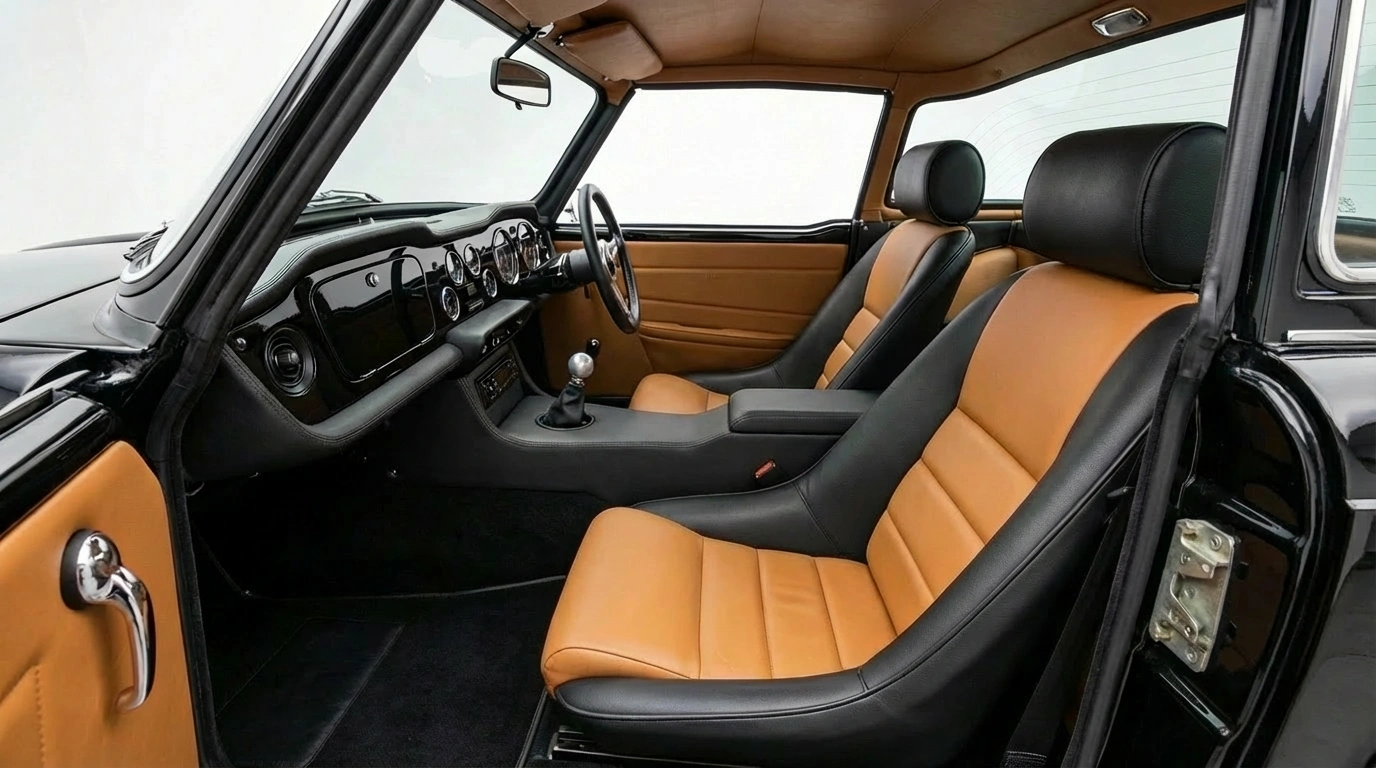
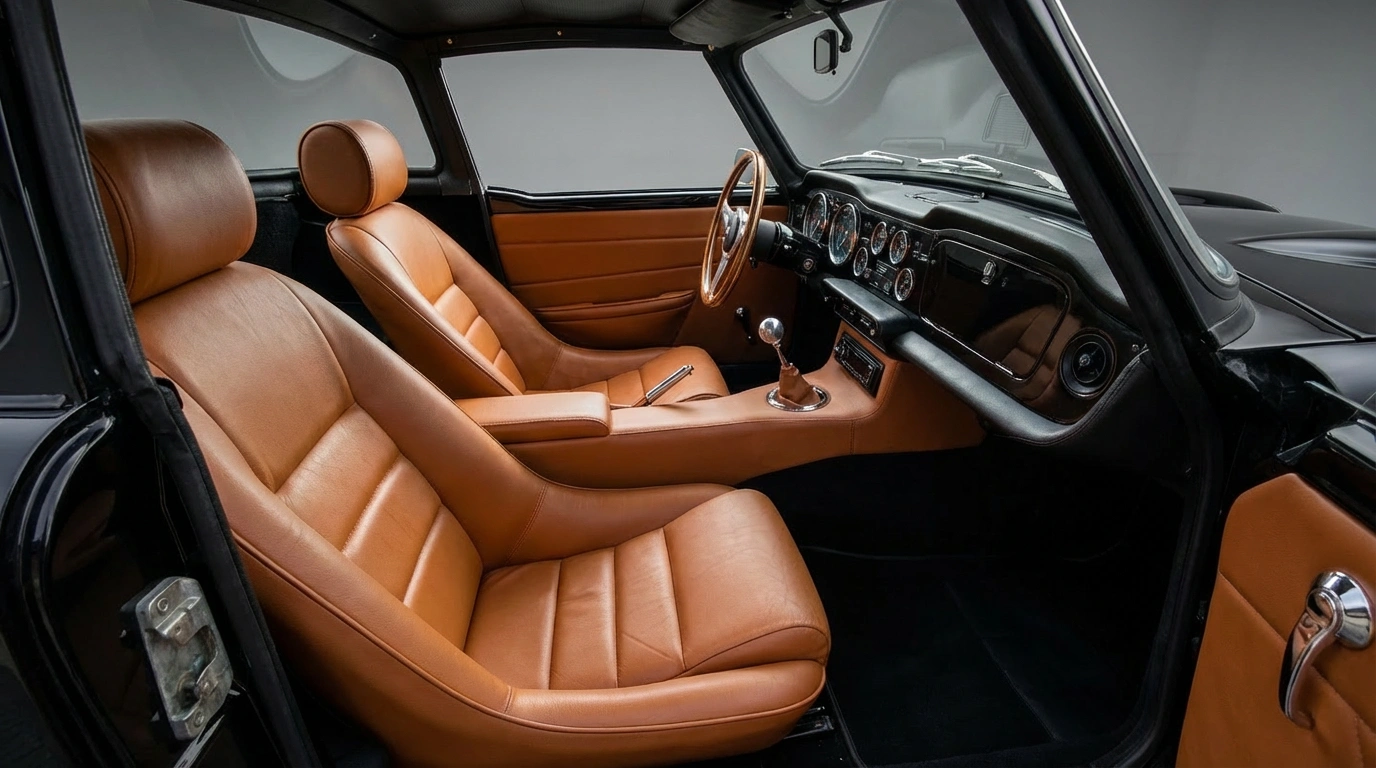
The TR6B chassis creates a unique opportunity — to lower the cabin floor and reset the relationship between seat, floor, steering wheel and pedals. Lowered floor sections allow the driver and passenger to sit deeper in the car, giving a more hunkered-down driving position than a conventional TR6, while also creating much-needed space above the knees compared to the original. This not only improves comfort, but lowers the centre of gravity of one of the heaviest components in the car — the occupants. The steering column is new and the steering wheel position revised with a new pedal arrangement, resulting in a cabin that is simply better to be in and drive. These elements can also be tailored to the owner during the build. Seats — a challenge in the original, given the compact cabin — are spec'd to suit the customer and can be retrimmed to both fit the space and for chosen upholstery, as well as the new centre console formed by the spine of the chassis. The dashboard, gauges and switchgear are recognisably TR6 in layout, but with modern gauges and all-new switch controls throughout the car.
A COMPLETE CAR, BUILT TO ORDER
TR6B is a turn-key car. The base car is supplied by BaulyCars, though owners may provide their own.
TR6B is not a restoration or a conversion. It is a complete build — developed around an agreed specification and delivered as a finished car.
Sourcing an ideal TR6 base car, its preparation and modification, and its integration with the new chassis are all handled within the build, allowing the car to be developed properly as a complete package.
Each car is developed around how it is intended to be driven — from powertrain direction and gearbox choice, through to chassis setup, interior layout and finish. The result is a complete car, built to spec for the owner.
The TR6B configurator is available by enquiry, allowing each build to be properly discussed and defined before becoming a formal specification.
SELECTED VIEWS
A closer look at TR6B proportions, stance, bodywork, chassis thinking and design development.
COMMISSION A TR6B
Discuss specification, build direction, timing and delivery directly with BaulyCars. TR6B enquiries are handled individually so that each proposed car can be developed around the customer, the intended use and the final character of the build.
Private configurator access available by enquiry.
FOLLOW THE BUILD JOURNAL
Development updates, restorations, workshop progress and the story behind BaulyCars builds.